Wednesday, August 17, 2011

Citizen Forester Spotlight: Kevin Kelso

Ever since he was a child, Citizen Forester Kevin Kelso has had a passion for trees. A native to Des Moines, Iowa, Kelso says one of his earliest memories “is looking out the window of the car… and seeing the towering trees on either side of the road forming a green archway overhead.”

After moving to D.C., Kelso was shocked by satellite images showing the District’s diminishing tree canopy that appeared in The Washington Post. They were the same images that moved philanthropist Betty Brown Casey to establish Casey Trees in 2002. Kelso was concerned for the District’s trees and began following the efforts of Casey Trees, “fascinated by its tree inventory project.”

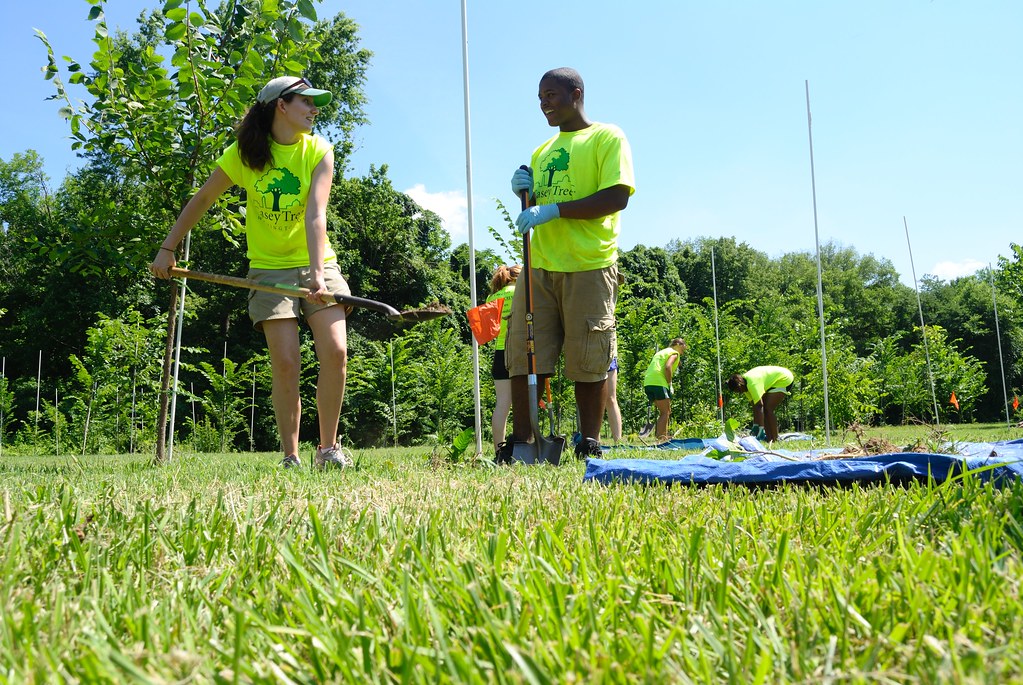
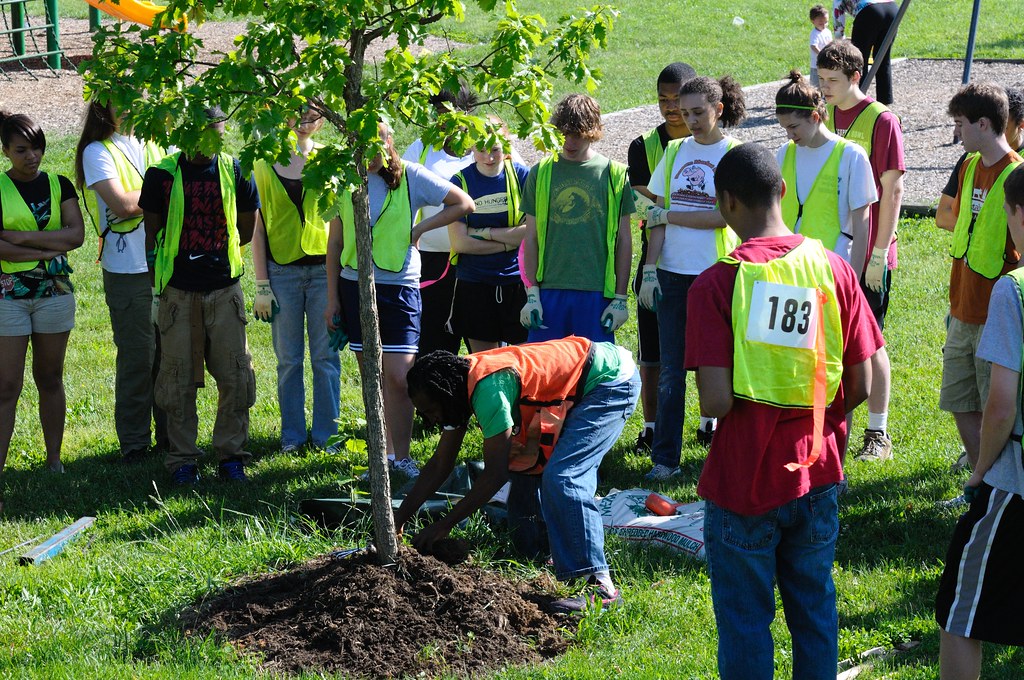
Kelso (left) works with a fellow volunteer at a Community Tree Planting event in March

In 2007, Kelso acted on his love for trees and attended one of Casey Trees’ free classes, Introduction to Trees and Inventory (now called Trees 101). He has been a committed Citizen Forester ever since, qualifying as a Lead Citizen Forester in 2008 and attending more than 40 Community Tree Planting (CTP) events.

For Kelso, planting with Casey Trees is always a “rewarding experience.” He loves tree planting events because they present an opportunity to meet new people and visit different neighborhoods. He also says that there is a meditative quality to tree planting: “mundane concerns are displaced by the focus on getting that tree in the ground.”

Sure, planting events are self-gratifying for Kelso, but his motivations for volunteering with Casey Trees are also altruistic. Unlike all too many of us, Kelso grasps the long-term effects of our interactions with the earth. He takes pleasure in knowing that the reconstruction of D.C.’s canopy will create a “lasting improvement that will be enjoyed for generations to come.”

This Citizen Forester spotlight was featured in the August issue of our online newsletter The Leaflet. Read more stories from The Leaflet or sign up here to receive updates from Casey Trees!

Spots Still Open for Stand Up for Trees!

Spots are still available for our next free Citizen Forester-qualifying class! Stand Up for Trees will be held on August 27 from 9 a.m. until 2 p.m. at our headquarters, 3030 12th Street NE. Sign up today!

We know that increasing the District's Urban Tree Canopy (UTC) from 35% to 40% by 2035 will be no small feat. Casey Trees is determined to make it happen, but it will take the support of informed citizen advocates to help us get there. At Stand Up for Trees, Maisie Hughes, Director of Planning and Design, Sue Erhardt, Director of Education and Shawn Walker, Urban Forestry Instructor, will teach you everything you need to know to advocate for trees in your community.

Stand Up for Trees will:
  • Teach you about the tools that are provided by the District's municipal services
  • Provide advice from community members who have effectively increased their neighborhoods' tree canopy
  • Help you create action plans to stand up for your community's trees
  • Qualify you as a Citizen Forester
  • Feed you - a light breakfast and lunch will be provided
Trees can't speak for themselves. Together we can make sure that old ones are protected and new ones are planted, to reach our goal of 40% UTC coverage by 2035. Visit our calendar to sign up for Stand Up for Trees and to view other upcoming events. We hope to see you on August 27th!

Tuesday, August 16, 2011

Wrapping Up the Summer Crew Season

Contributing Writer - Priscilla Bocskor, Education Coordinator

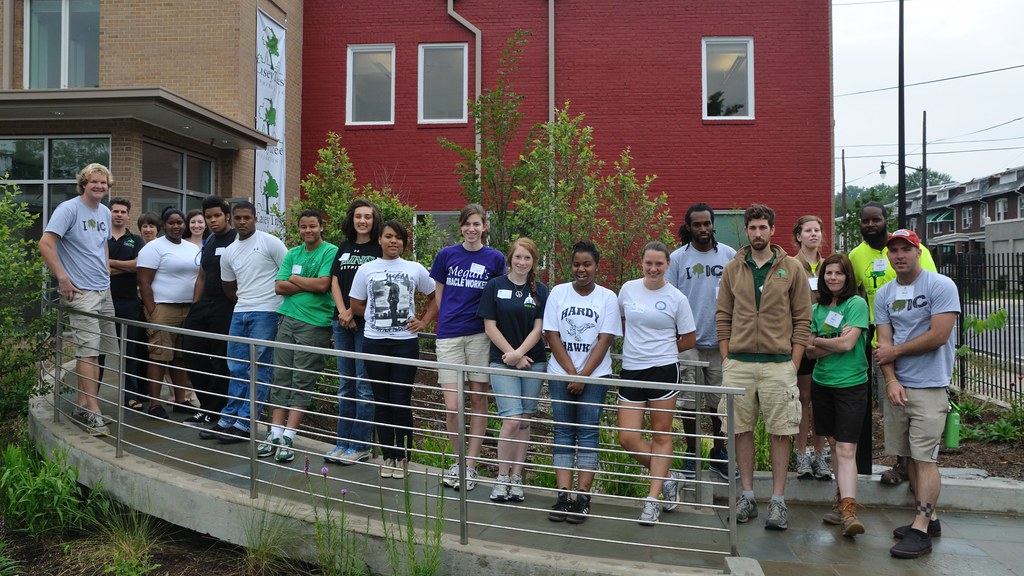
The 2011 Summer Crew (and the Casey Trees Education and Urban Forestry support staff).

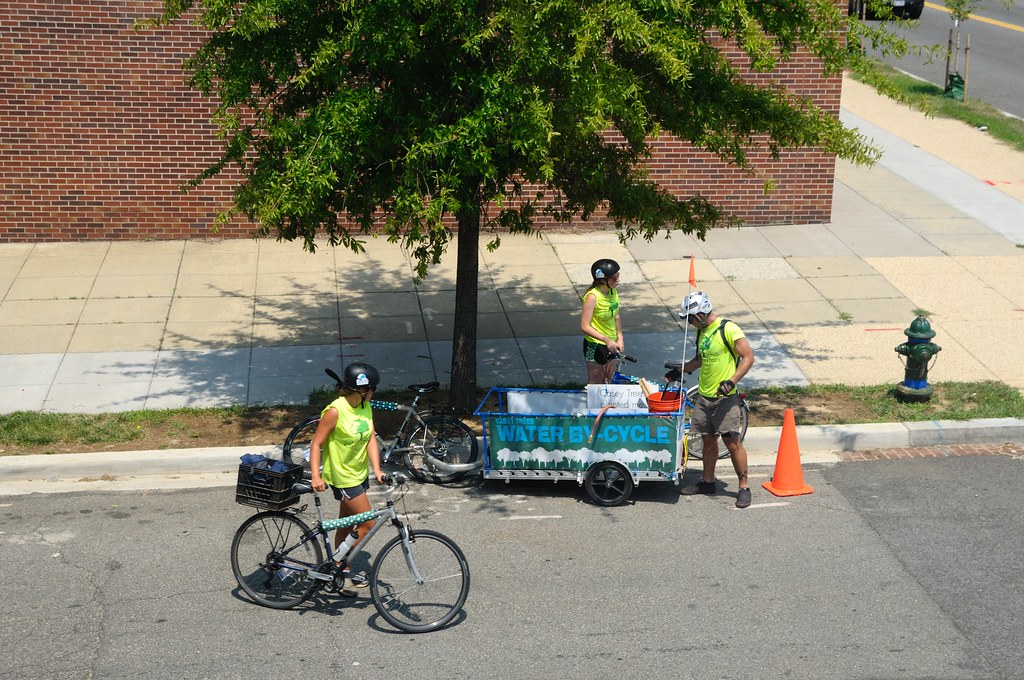
Wow! This summer really flew by. I’m so proud of the work our High School Summer Crew students did this summer. Even during July, the hottest month ever in D.C., the Summer Crew not only reached the tree touch goal of 5,946 trees but exceeded it! A total of 6,202 trees were watered by the truck and Water By-Cycle Summer Crew 2011.

All of this watering is critical for the survival of newly planted trees, which the Summer Crew was able to visit three or four times over the course of the summer. During the past 8 weeks the District never received the 1.5 inches of rain a week that these trees need.

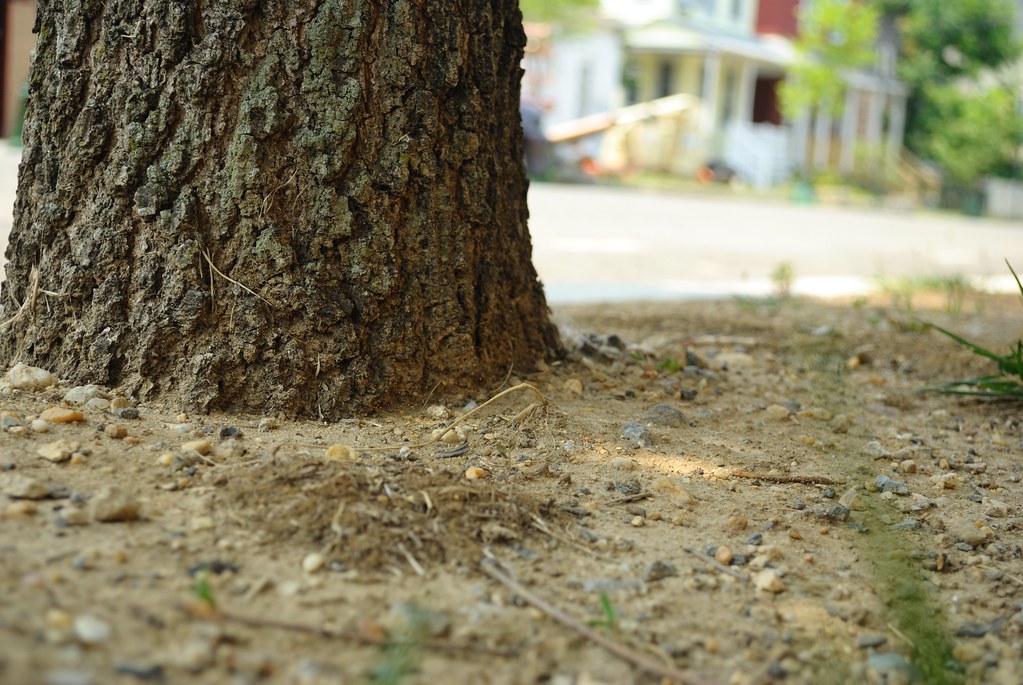
A dry willow oak in June near Casey Trees HQ that was watered regularly by Summer Crew (currently doing OK).
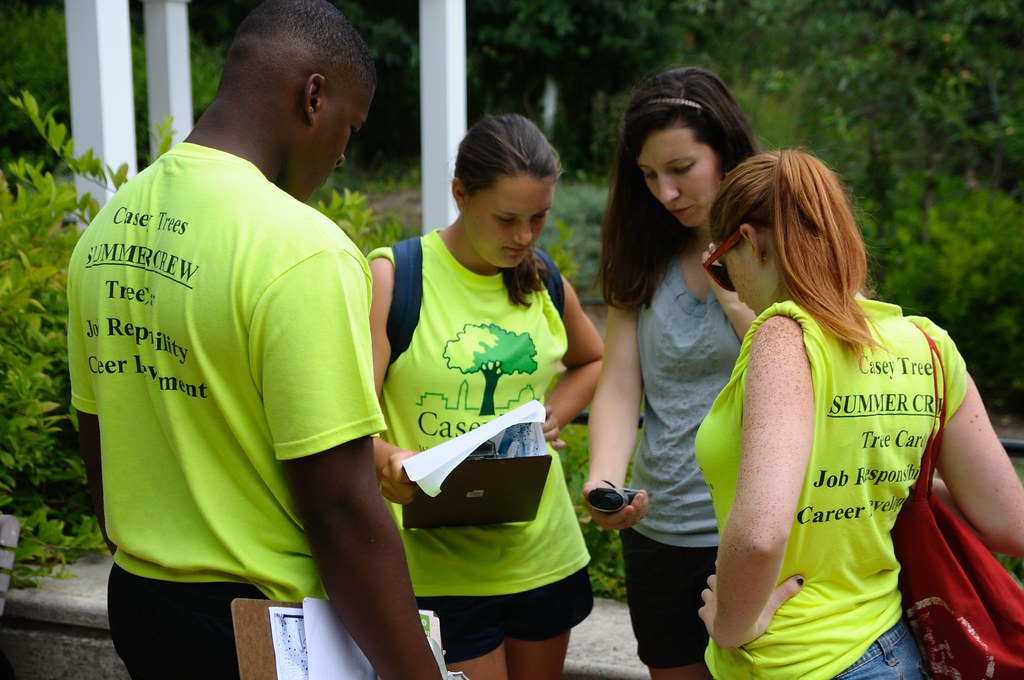
Summer Crew students not only watered and cared for trees but learned valuable job skills and earned all four of their Career Development Days. During Career Development Days students spent the day learning about one of the following green careers related to trees: Arboriculture, Landscape Architecture, Nursery Management, and Geographic Resources.

While the summer may be over, the benefits of Summer Crew 2011’s hard work will have long term impacts as these trees grow and contribute to D.C.’s 40% tree canopy goal. Thank you Summer Crew 2011!

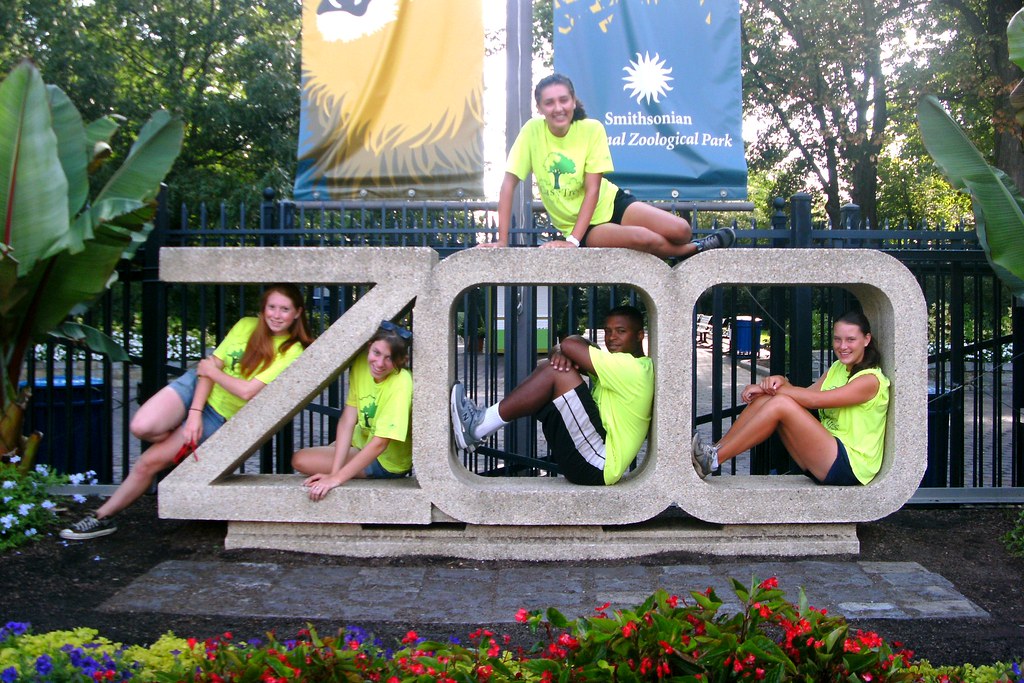
Learning about tree inventory and mapping at the National Zoo.
Summer Crew members at a tree care event at Michigan Park in Ward 5.
Caring for American elms at Daingerfield Island.

Monday, August 15, 2011

Summer Crew Update #8: A Challenging Learning Experience

Contributing writer - Ann Elise Trafford, Summer Crew Team Member

Taking a break from cycling around the city.
Before summer started, I expected my time on Casey Trees' Summer Crew to be routine. However, this summer has turned out to be much more for me.

After reading our orientation packet I was expecting the work environment to be strict. Yet, I found the high expectations to be extremely helpful because it emphasized the importance of job responsibility - one of the three goals of the program - to us. For example, arriving to work on time was expected so we were very diligent about showing up before 8:05 a.m. I think we all ran down 12th Street in our bright yellow shirts at least once to make it on time!

I also did not expect hard work to be so fun. Even during the hottest days, my spirits were always high because we talked, joked and encouraged each other throughout our shift. Surprises like ice pops and cold Gatorade helped too! This experience has taught me how to effectively balance work and leisure time so I can accomplish what needs to get done and be able to enjoy the task.

Summer crew members exploring the city.
One thing I am extremely grateful for is being introduced to my fellow crew members. Over the past eight weeks we have really bonded. Even during mundane activities there was never a dull moment in their company. I think this summer has meant different things to each of us but I am confident everyone would say that this has been a great experience for them.

Friday, August 12, 2011

Summer Crew: Tree Planting Crew Update

Contributing writer - Jabbari Brew, Urban Forestry Crew Member

Being a part of the Summer Crew truck team has been a fun and enjoyable learning experience for me. Riding with truck team is like getting a free tour of the city. I get to visit every ward and see what common trees are in different neighborhoods. I have discovered how beautiful and unique Washington D.C. is and how it is changing. I have seen beautification of areas that have been ignored until recently. For example, closer to my own neighborhood we are watering trees: a mix of cherry trees and river birch at Ballou High School as well as oaks and crabapples at Congress Heights Park (both places that our tree planting crew has planted trees this past April).

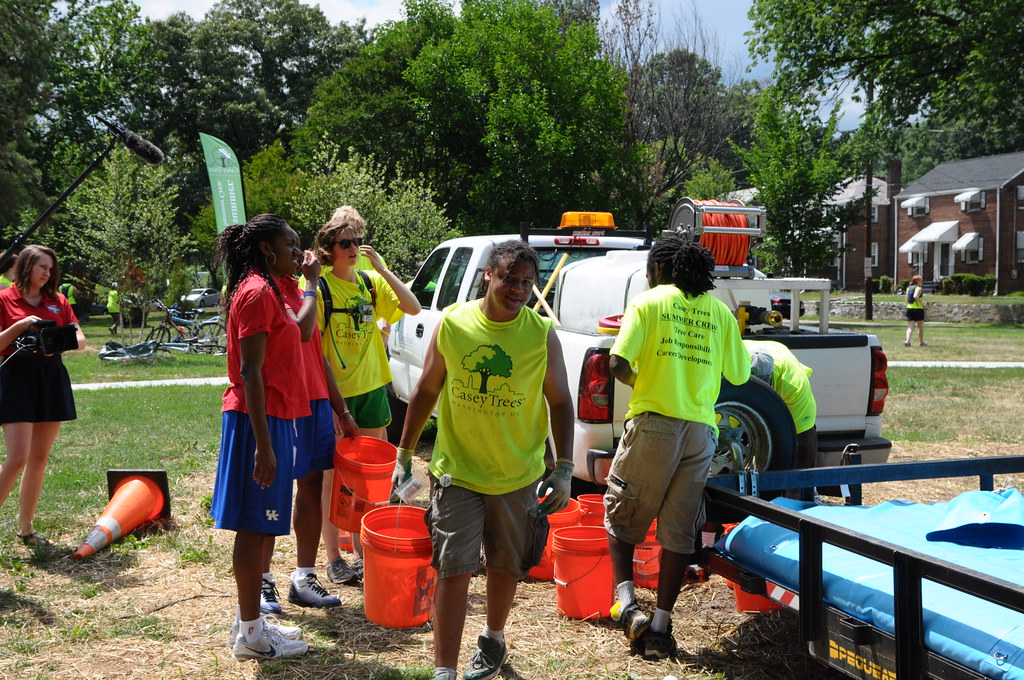
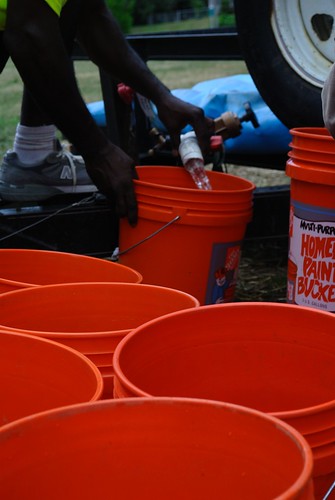
I play a major role in Summer Crew operations as a co-pilot of one of the two Casey Trees trucks assisting Ed Bell on his famous "bucket brigades." I manage the flow of water from the truck’s bladder, which holds 500 gallons of water, to the buckets. I fill buckets and move them into a receiving line for the students while trying to reduce spillage. When one of our water tanks malfunctioned, I improvised a method to dip the buckets and scoop water out of the tank.

Filling up buckets from the truck's water bladder.
I also help the crew chiefs navigate the eight wards of the District to water all of the trees we planted. We have tree maps as a guide to our watering routes. The maps are pretty informal - they include the location of the trees and the maps’ color coding helps us prioritize what trees need water the most. It has been our goal to water red dots on the maps (trees planted in the last year) four times. The maps also indicate where fire hydrants are so that we can refill the truck's water bladder.

Jabbari demonstrates best maintenance practices to prospective Summer Crew members.
Overall, it has been a very intense, hot summer, which added a significant challenge to the already difficult work. One the hottest days had to be July 22 when the heat index was close to 115. We had to stop early because it was too hot, yet we watered enough trees to satisfy our goal for the day.

I also help engage the Summer Crew students in their work and try to make it meaningful to them by teaching the students tree identification. I hope that the students leave Casey Trees feeling connected to trees, and I believe knowing a tree’s name helps build that connection. As we water the trees I know we all have come to appreciate them more, especially the shade they provide us for a cool lunch spot on a 90 degree summer day.

Friday Photo Feature - August 12, 2011

It's the last day of High School Summer Crew!
View more on Flickr or submit your own photos of trees. 

Thursday, August 11, 2011

Summer Tree Care: Care for Your Trees, Don't Carve

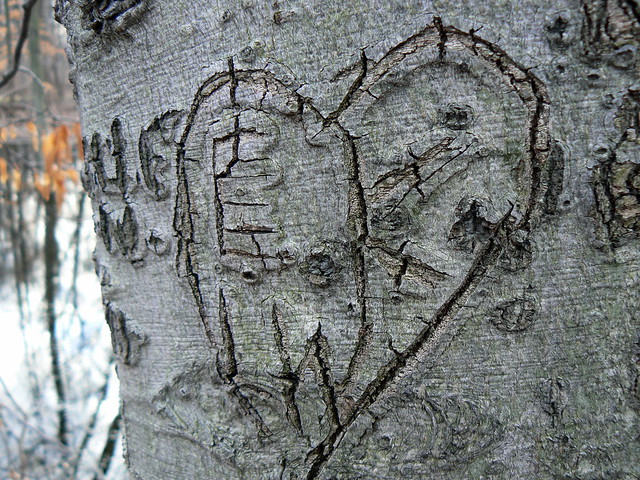
We’ve all on occasion seen words, images or initials carved into a tree’s bark. Whether the perpetrator acted to profess an eternal love for someone special or was simply looking to make his or her mark, many unsuspecting trees fall prey to this senseless act of tree-violence. It simply isn’t necessary! And it isn’t healthy for the trees involved, either.

Large or small, any cut made into a tree causes serious, lasting damage. Food and water are transported directly under the bark through the phloem and xylem. Carving into this vascular system prevents the flow of nutrients to different parts of the tree, ultimately causing it to die. Wounds are most visibly made by knives and other sharp objects but can be caused by nails or staples, too. So next time you're hanging up a yard sale or lost dog sign, skip the trees in favor of the closest telephone poll.

Birch and aspens are often the targets of tree carving artists. Their smooth, white surface offers a tempting canvas, but again, think of the tree! Trees already have many potential dangers in an urban environment; don’t add your artistic expression to that list.

photo
This poor tree doesn't feel the love. Photo credit: Benimoto
While today's tip is one preventive measure when considering a tree's health, there are many more proactive ways to care for your trees. Check out some previous Summer Tree Care tips on careful gardening, mulching and identifying pests, or take a look at our Calendar for upcoming tree care-related events and classes, including the Citizen Forester-qualifying class Stand Up for Trees on August 27.

Wednesday, August 10, 2011

Summer Crew Update #7: Learning Mapping at the National Zoo

Contributing writer - Claire Carter, Summer Crew Team Member

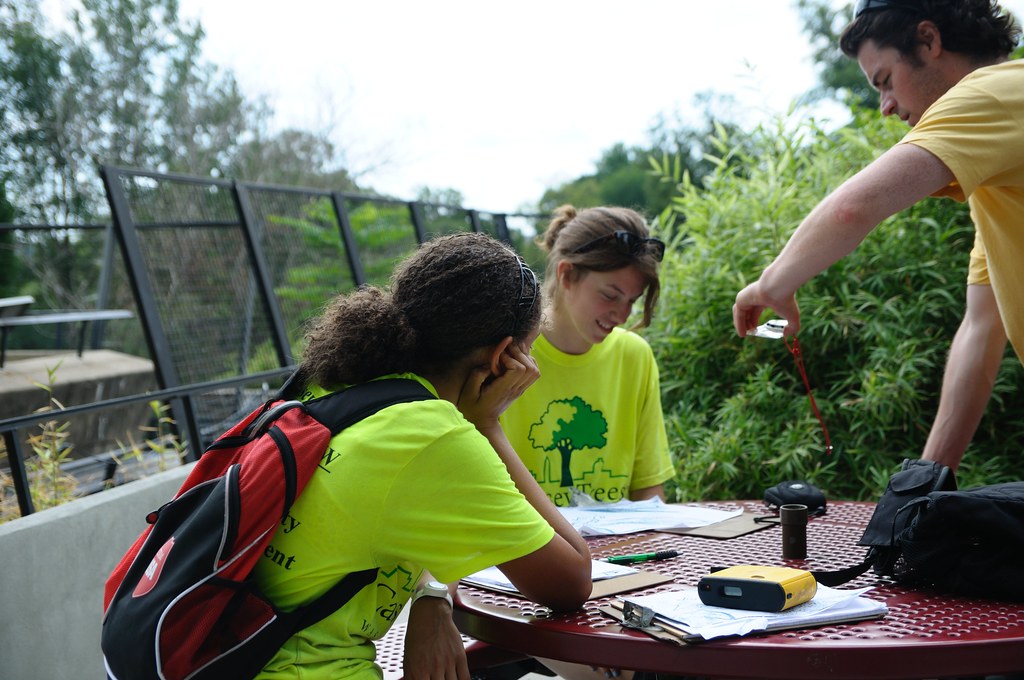
Summer Crew members Claire Carter and Sarah Turner learn mapping from Director of Geographic Resources Tom Buckley.

Lions and tigers and bears were certainly all around us today as we made the trip to the National Zoo. However, for most of us it was the first time that we were studying the lindens, tulip trees, and birches throughout the zoo. It was amazing to realize that besides all of the exotic animals on display at the zoo, the diversity of the trees was beautiful. The trees were mature, well taken care of and helped to replicate a more natural habitat for many of the animals.

Arguably the most difficult part of the day was realizing that I had little to no command on the use of a compass, however, with Tom Buckley’s help my partner and I were quickly able to grasp a better command on using the compass only for navigation. We did both agree that the electronic GPS still would win the award for ease of use and familiarity. But to learn about the triangulation by hand was informative and makes me think I will be fine if I go hiking without technological assistance!

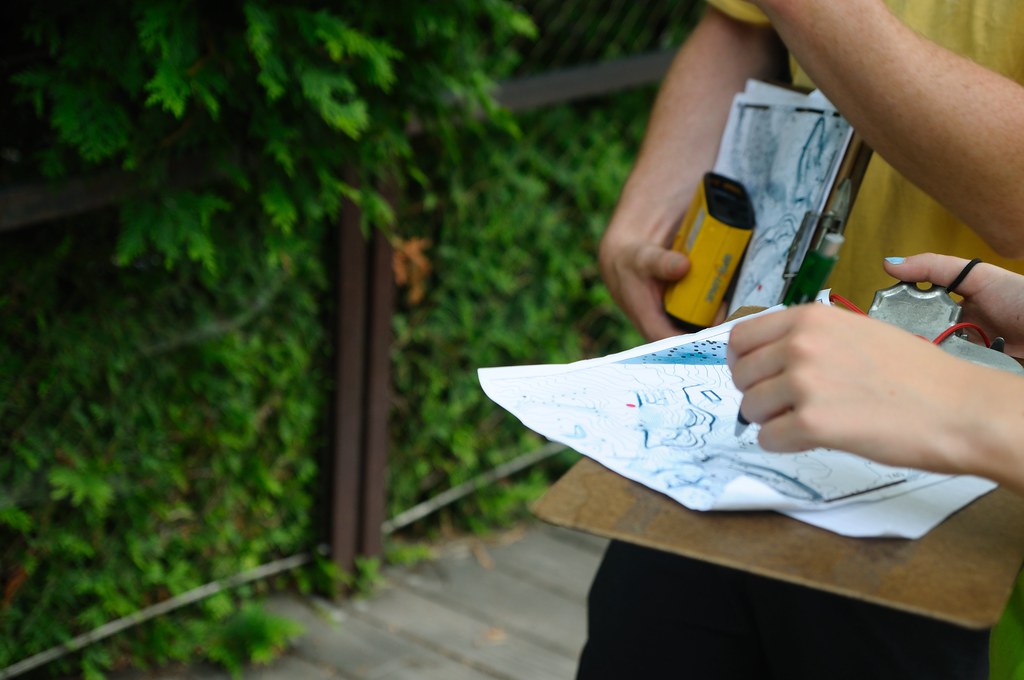
Navigating the zoo by paper and compass.

To finish up the day we headed back to the office, to learn about Walking Papers, a grassroots initiative to improve mapping around the world by submitting mapping data to Open Street Map (kind of a Wikipedia for maps). So the Summer Crew tried our hand at it and mapped the trees along the block of the Casey Trees office. We got to use the handy tape measure that converts the circumference of the trees to the diameter which is helpful to identify how healthy the tree is based on how old it is. Afterwards we input this data into the website and the Summer Crew has now contributed our part to an inventory of the Brookland neighborhood's trees.

Today was a great career development day which really showed how important the mapping of areas can be, especially in being able to keep track of the trees that we are watering and other trees throughout the city. And of course seeing the cute animals was a bonus!