Showing posts with label Tree Care. Show all posts

Friday, August 26, 2011

Tips for Summer Tree Care: Proper Placement


As summer winds down, our final tree care tip can help you prepare for the upcoming fall season. This past July was D.C.’s hottest month ever—surely either you or your house’s cooling bill suffered the effects. You can avoid similar woes in summers to come by planting shade trees on your property this fall!

Conditions for planting are best during the fall and the spring, when temperatures are cool and rainfall is more frequent. Early fall is also a great time to plant because root systems have a chance to stabilize before harsh winter weather sets in. So you know when to plant, but where should you plant? Here are some important things to remember when deciding the location of your new tree:
  • Keep the tree’s mature size in mind. Plant at least 10 feet from buildings, three feet from sidewalks and 10-20 feet from other trees depending on their size.
  • If possible, plant on the southwestern and western sides of your home. Strategically-placed trees that shade your home from the sun can save you 10 to 30 percent on cooling costs!
  • Plant around utilities. Call Miss Utility at 1-800-257-7777 to have your underground utility lines marked for free. Plant at least 10 feet from overhead wires and three feet from underground utilities. 
New trees can be costly, but if you take advantage of our Tree Rebate program you could save up to $100 per tree! Improvements to the Tree Rebate program have removed quantity limits, so you can receive rebates for each tree you plant. Rebate amounts depend on the size and species of each tree. Read more information and check our list of qualifying trees here.

Too busy to do all the planning yourself or want some guidance on tree selection? With our RiverSmart Homes program, a Casey Trees representative will come to your home, determine the best location and return at a later date to actually plant the tree. Learn more about the program.

    Thursday, August 11, 2011

    Summer Tree Care: Care for Your Trees, Don't Carve

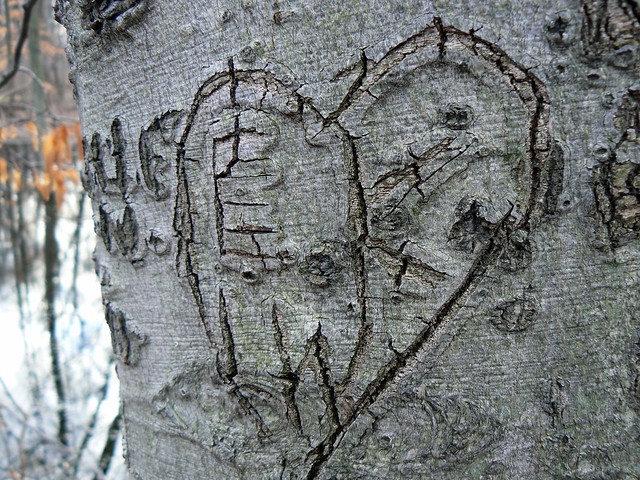
    We’ve all on occasion seen words, images or initials carved into a tree’s bark. Whether the perpetrator acted to profess an eternal love for someone special or was simply looking to make his or her mark, many unsuspecting trees fall prey to this senseless act of tree-violence. It simply isn’t necessary! And it isn’t healthy for the trees involved, either.

    Large or small, any cut made into a tree causes serious, lasting damage. Food and water are transported directly under the bark through the phloem and xylem. Carving into this vascular system prevents the flow of nutrients to different parts of the tree, ultimately causing it to die. Wounds are most visibly made by knives and other sharp objects but can be caused by nails or staples, too. So next time you're hanging up a yard sale or lost dog sign, skip the trees in favor of the closest telephone poll.

    Birch and aspens are often the targets of tree carving artists. Their smooth, white surface offers a tempting canvas, but again, think of the tree! Trees already have many potential dangers in an urban environment; don’t add your artistic expression to that list.

    photo
    This poor tree doesn't feel the love. Photo credit: Benimoto
    While today's tip is one preventive measure when considering a tree's health, there are many more proactive ways to care for your trees. Check out some previous Summer Tree Care tips on careful gardening, mulching and identifying pests, or take a look at our Calendar for upcoming tree care-related events and classes, including the Citizen Forester-qualifying class Stand Up for Trees on August 27.

    Thursday, July 28, 2011

    Summer Tree Care: Signs of Pests and Methods to Stop Them

    Have you recently noticed strange markings, discolorations, or other abnormalities on your beloved trees? You may be seeing signs of a problem - a pest problem. Before trying to identify the specific pests or taking action, first take note of symptoms of your tree's affliction.

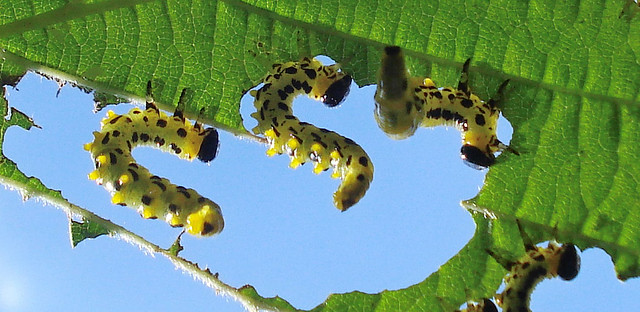
    If your trees have chewed or skeletonized leaves, then sawflies, slugs or Japanese beetles may be at work. Discolored leaves or blossoms can be a sign of thrips, aphids, spider mites or lace bugs.

    One simple solution for some harmful insects - including the aforementioned sawflies and aphids, among others - is horticultural oil, which has been used for much of time to protect trees and plants. While many petroleum-based oils are commercially available, there are also a number of natural, plant-based options, like cottonseed oil. Horticultural oils are safe for human contact and usually have little or no effect on surrounding wildlife or non-invasive insects. However, their use does carry a number of disadvantages.

    photo
    Sawfly larvae devour a leaf. Photo credit: Mick E. Talbot

    A horticultural oil's success rate is relatively time sensitive, as they often affect their intended targets through coating a sticky - rather than toxic - film on the tree. Try to avoid spraying oil when temperatures are excessively high - the tree may already be under stress from dry conditions. Most notably, not all pests can be controlled with this method. Remember: focus on identifying the problem first, as many pest problems will need more specialized care from an arborist.

    Look out for future classes on insect identification (such as our CSI for Bugs course offered last month) on our calendar of events online.

    Wednesday, July 20, 2011

    Thank You, Steinbruck Center Volunteers!

    Thank you to all the volunteers who helped out at our latest tree care events!

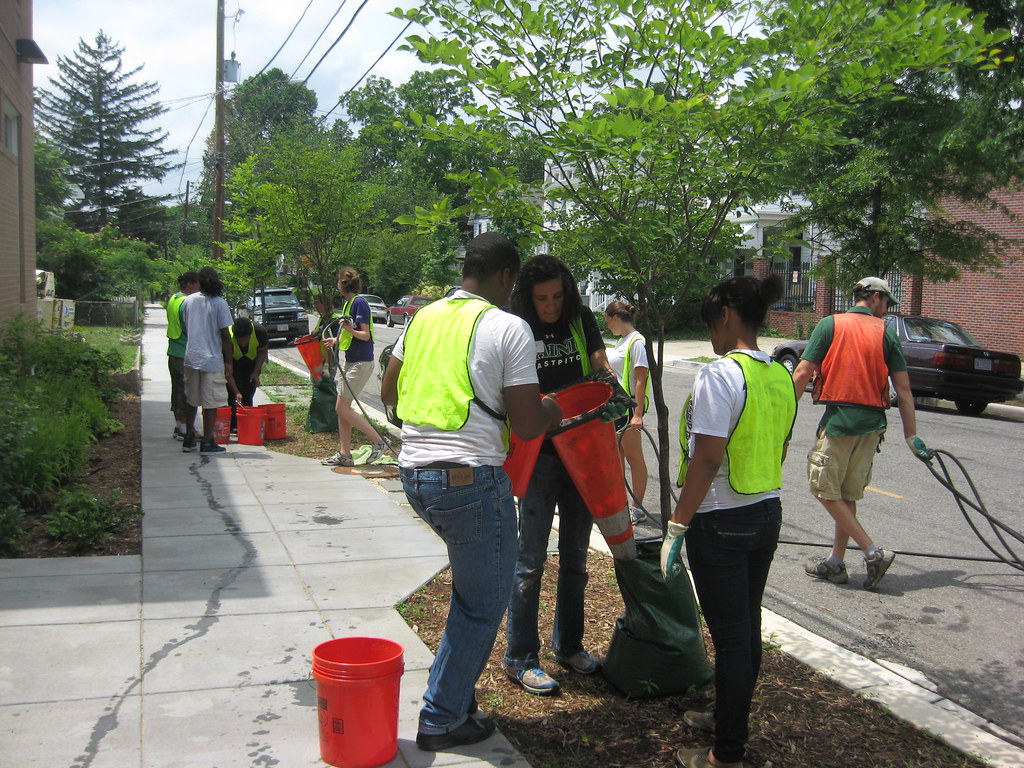
    On Monday, 26 volunteers from Peach Lutheran Church in Waunakee, Wisconsin connected with Casey Trees through the Steinbruck Center to care for trees at the Metropolitan Branch Trail. 25 trees were watered and weeded. The following day, 18 volunteers returned to tend to 33 more trees. The volunteers, along with several members from our high school summer crew, cared for the trees in record time on Tuesday, completing the task in one hour!

    A young volunteer from Peach Lutheran Church waters a tree at Met Branch Trail

    Casey Trees planted trees along the Met Branch Trail at two Community Tree Planting events this past April and December. If you are interested in organizing a group tree care event, please contact Carol Herwig at cherwig@caseytrees.org.

    View photos of our Tree Care events on Flickr.

    Monday, July 18, 2011

    Volunteers Help Our Trees Stay Hydrated at Alice Deal School

    Thanks to a group of Stanford alumni for all their help watering trees at Alice Deal Middle School this past Saturday morning. An eclectic group group of ten representing recent graduates, older alumni and even some future students came out to Alice Deal, managing to water and weed 57 trees!

    Casey Trees has held a number of Community Tree Planting events at Alice Deal, most recently this past May. With temperatures expected to hit triple digits later in the week, these young trees certainly got a much-needed watering.

    Two volunteers fill a young tree's ooze tube.
    If you would like to organize a group tree watering event, please contact Volunteer Coordinator Carol Herwig at cherwig@caseytrees.org. And remember, young trees need 25 gallons of water per week to grow healthy and strong. Take the 25 to Stay Alive Pledge and receive a free rain gauge to help you monitor your trees' water intake.

    Thursday, July 14, 2011

    Summer Tree Care: Mulching

    So far in our summer tree care blog series, we have covered watering, pruning and careful gardening. Today’s topic is an issue of surprisingly growing concern for all tree care-takers: mulching.

    When applied properly, mulch can greatly benefit your trees by:
    • Controlling weeds and grass
    • Maintaining moisture in the soil and keeping your tree hydrated
    • Protecting the roots and trunk from mowers and other lawn maintenance tools
    Unfortunately, poor mulching techniques - namely the “volcano” - have recently been popping up all over the District. Improper mulching techniques can lead to rotted roots, dead bark tissue, insect problems and imbalances in the soil’s pH levels.

     
    Improper volcano mulching (left) versus proper mulching technique (right).

    Here are a few simple tips to keep in mind when mulching your tree:
    • Use organic mulch. While inorganic mulch is sometimes useful for soil protection, organic materials are best when mulching trees. Shredded bark, leaf compost, and composted wood chips all work well.
    • Remember the 3-3-3 Rule. Create a ring of mulch around your tree, 3 inches deep in a 3-foot radius from the trunk, making sure to leave a 3-inch space right around the tree trunk.
    • Avoid volcanoes. Don’t pile the mulch against the trunk of your tree. When you’re finished, the mulch should look more like a doughnut than a volcano. 

      For more summer tree care tips, tune in to Tree Talk Thursday today from noon to 1 p.m. 

        Wednesday, July 13, 2011

        Summer Crew Update #4: Tree Care Lessons

        Contributing writer - Sarah Turner, Summer Crew Team Member 

        In my third week as a Summer Crew team member, I have learned a few important tree care basics. Although many people believe that trees are self-sufficient and do not require much care after being planted, young trees need extra attention the first three years they are in the ground.

        Stressed trees may need extra care.

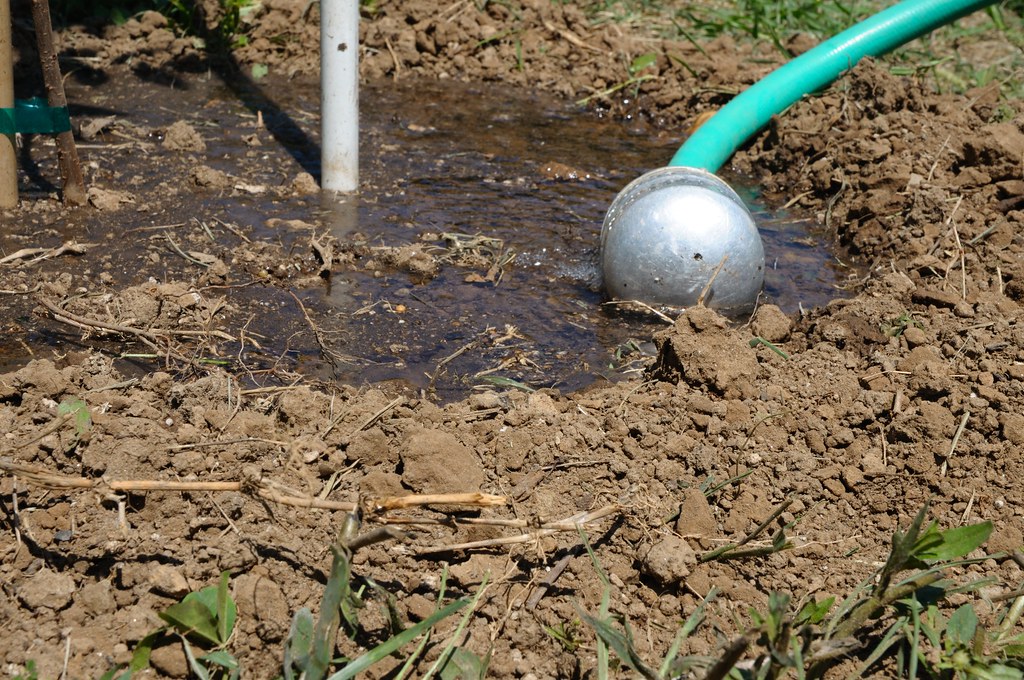
        The standard rule of thumb is to ensure each newly planted tree receives 25 gallons of water per week - the exact amount our slow-release watering bags hold. However, it is important to evaluate each individual tree's needs. Some trees may show signs of distress, such as browning of leaves and could use additional water to help return them to health. I have learned to pay attention and respond to these small signs.

        Weeding and mulching is frequently overlooked. Weeding removes competition for nutrients and mulching prevents weeds from returning and keeps the soil moist. Both are very important to do in the summer months and only takes a few minutes to do.

        Summer Crew member Sarah Turner working at Daingerfield Island.


        Lastly, be careful with lawn care equipment like lawnmowers. One nick on a tree's trunk can sever its nutrient transportation system. The tree may not show signs immediate signs of distress but small tears and cuts can be fatal. Adding trunk guards at the base of the tree and protective mulch ring can help safeguard your trees.

        Tuesday, July 12, 2011

        Simon Elementary School Pruning Recap

        This past Saturday, 13 volunteers came out to Simon Elementary School to help give trees some much-needed tender, love and pruning. The volunteers joined five Casey Trees staff members to tend to about 60 trees on the school's grounds and surrounding parks. Among the group were 11 Citizen Foresters and six returning volunteers from the last pruning event at Murch Elementary.

        Volunteers put their pruning skills to good use on a young tree
        There was a wide range of tree species on site, including cherry, elm, zelkova, pin oak, red maple, crepe myrtle, and river birch. Due to the hot, dry conditions and lack of attention, many of the trees had branches that were dead or brown. But the short pruning event went a long way to improve the health of the trees. By 10:45 a.m. our staff and volunteers had taken care of the whole area!

        If you're interested in volunteering for our next pruning event on August 20th at Lafayette High School, contact Shawn Walker, our Urban Forestry Instructor, at swalker@caseytrees.org. Citizen Foresters are highly encouraged to sign up - and if you've already attended at least one pruning event this summer, you can still receive a free pair of pruners! Check our calendar for all upcoming events as well.

        Monday, July 11, 2011

        Many Hands Make Healthy Trees

        A big thank you to all the volunteers who came out to today's tree care event at Safe Shores! 12 volunteers from Immanuel Lutheran Church in Greenwood, South Carolina linked with Steinbruck Center and Casey Trees to help water 35 young trees. The trees were planted during a Community Tree Planting event in October. After watering and weeding this morning, volunteers toured the facility at Safe Shores and were joined by our Water By-Cycle crew. We appreciate all your help in making sure the young trees receive the necessary 25 to Stay Alive to stay hydrated in the summer heat!

        A volunteer from Immanuel Lutheran Church waters a thirsty tree.

        Also thank you to the Living City Block DC volunteers who helped us water trees at Met Branch Trail on Saturday. 9 volunteers joined Casey Trees to water the 65 young trees and weed a section of the pathway.

        If you or your organization are interested in participating in a tree care event, please contact Volunteer Coordinator Carol Herwig at cherwig@caseytrees.org. And don't forget - trees need 25 gallons of water per week to stay healthy. Make the pledge to water your trees and receive a free rain gauge!

        Tuesday, July 5, 2011

        Photos: Daingerfield Island Summer Crew

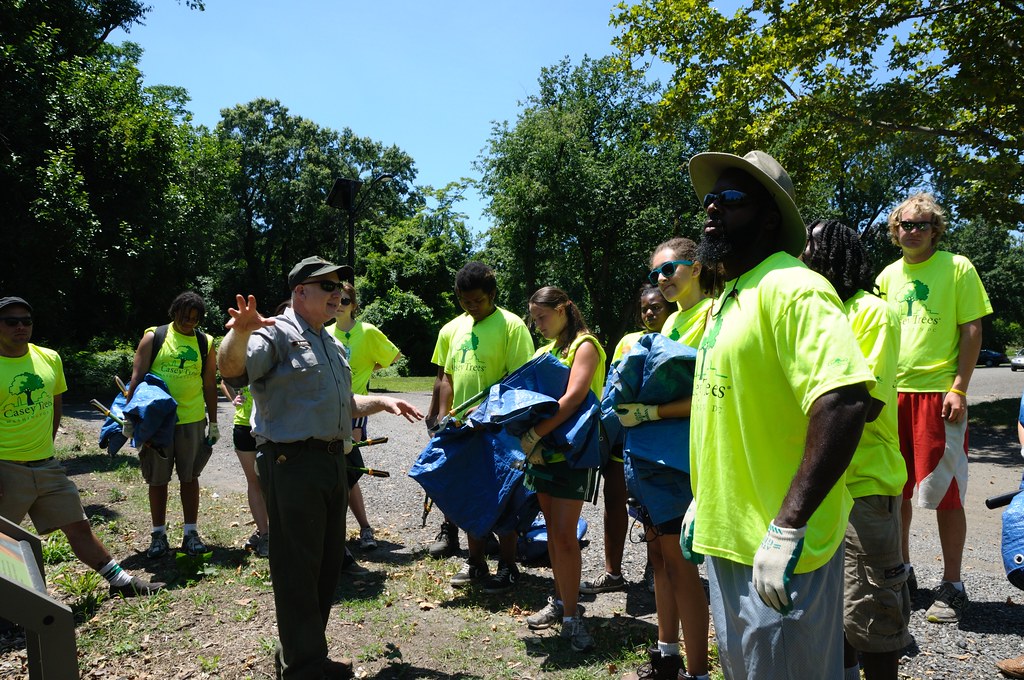
        The High School Summer Crew has been very busy learning about all that goes into tree care, from mulching to untangling water hoses. Last Thursday, the crew expanded their expertise even further during a pruning and tree care event at Dangerfield Island in Alexandria. National Park Service horticulturist Barry Stahl led the event, which was one of three professional development sessions the crew will attend this summer.

        Horticulturist Barry Stahl briefs our crew on pruning trees at Dangerfield Island.

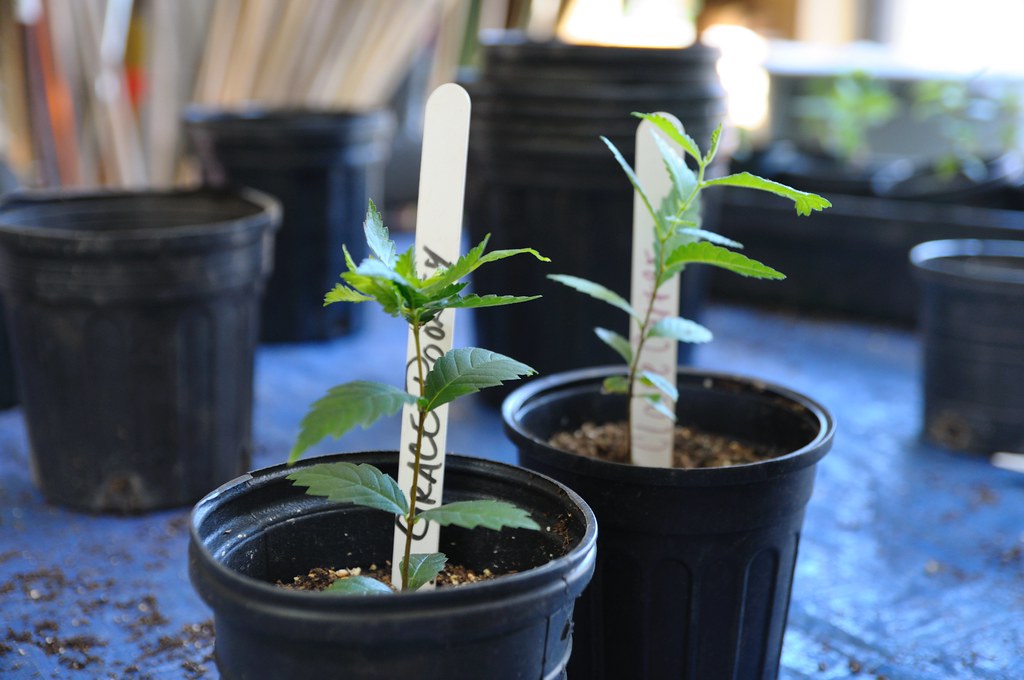
        Before pruning, each student picked out a baby American elm from the nursery. The crew members labeled the trees so they can check their progress as they grow.

        Young elms chosen and labeled by Summer Crew members.

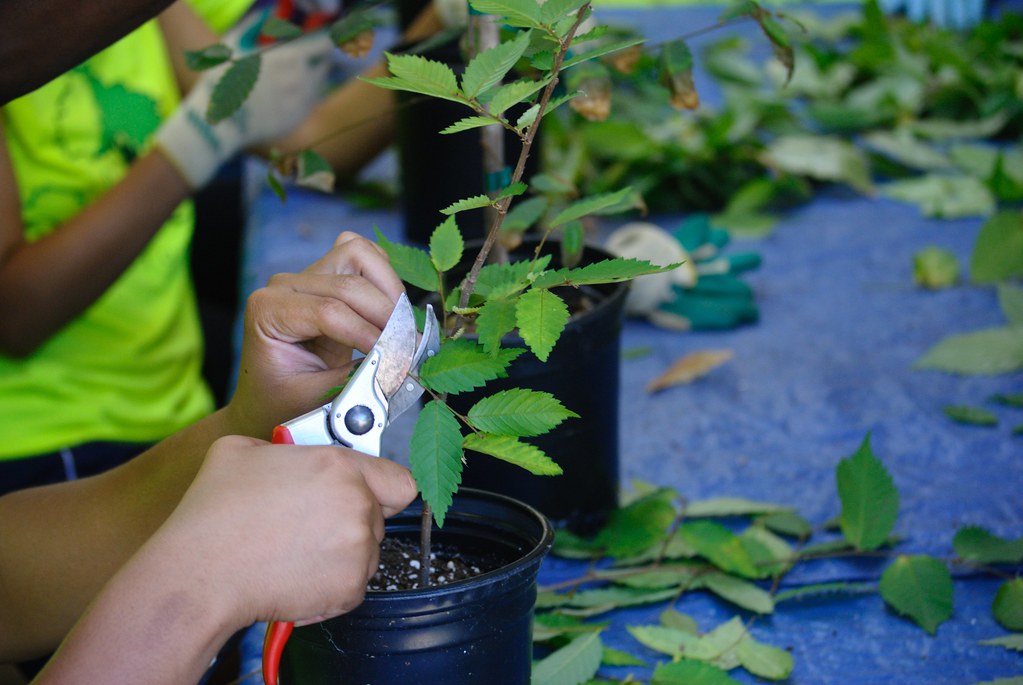
        For their first assignment, the crew pruned very young trees to make sure they grow properly.

        Unsuccessful trees were uprooted and replaced with healthy specimens in the field.

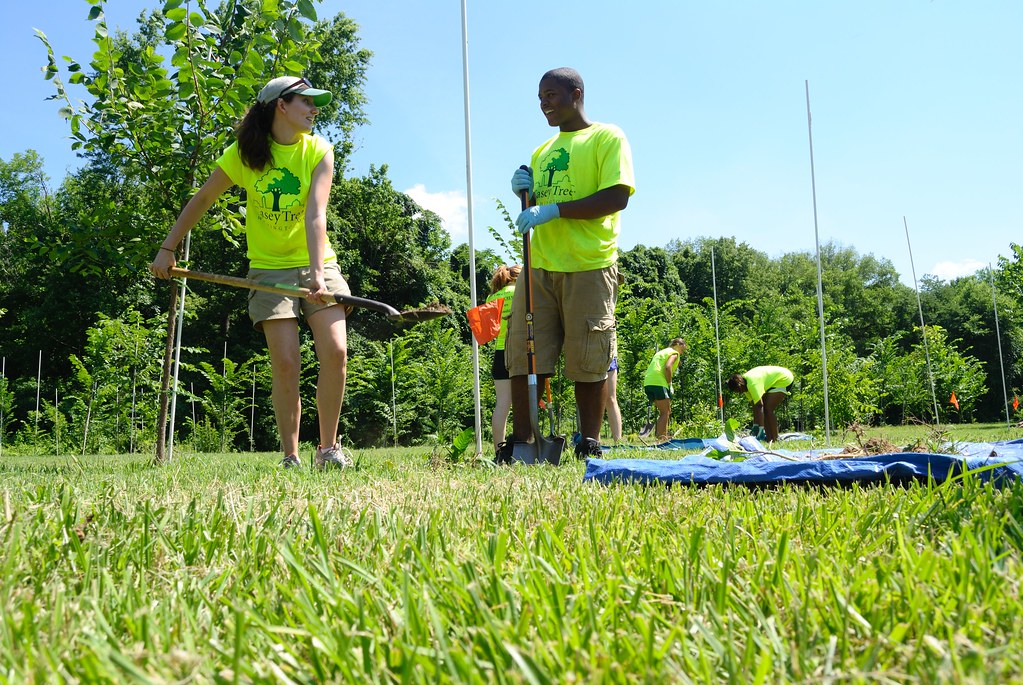
        At the American elm nursery, the trees remain in the greenhouse until they are three years old, when they are then planted in the outdoor field. Our high school summer crew helped prep the holes and plant the three-year-old trees in their designated spots.

        Summer crew members work together to tie a young tree to its guiding stake.


        See our 25 to Stay Alive tree watering guide for tips on how to keep your trees hydrated this summer.

        View this entire photo set on Flickr.

        Saturday, July 2, 2011

        Thank You, Meyers Institute for College Preparation Volunteers!

        Casey Trees would like to thank students participating in the Meyers Institute for College Preparation (MICP) program, part of the Center For Multicultural Equality & Access (CMEA) at Georgetown University, for their help keeping D.C.’s trees green. This past Thursday, 35 volunteers - 32 teenagers with three adults - from MICP watered trees at Ellington Field in Burleith.

        Using hoses attached to fire hydrants, the group watered and weeded 30 trees, most of which are on a steep hill. The trees touched Thursday were planted last fall at a Casey Trees-hosted Community Tree Planting. Take a look at photos from the previous season's event on Flickr.

        If you would like to organize a group watering event, please contact Volunteer Coordinator Carol Herwig at cherwig@caseytrees.org.

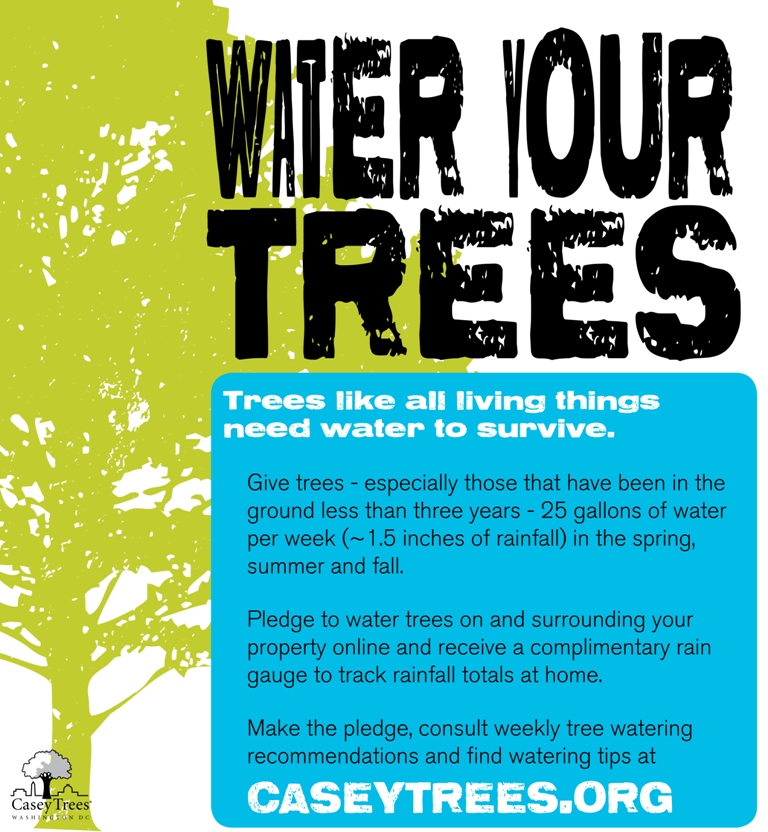
        Remember, trees need 25 gallons of water – approximately 1.5 inches of water per week – to grow strong and thrive. Take the 25 to Stay Alive Pledge today, and make sure to water your trees!

        Thursday, June 30, 2011

        Suckers - One Born Every Minute?

        Contributing Writer - Shawn Walker, Urban Forestry Instructor 

        What are Suckers?

        In the world of tree care, the term suckers refers to unwanted twigs that grow rapidly on abnormal parts of a tree. They typically grow as a result of a wound or stressor (e.g. drought, disease, insects, and root zone disruption) and can often be harmful to a tree’s health.

        Sucker growing from pruned tree - adventitious growth.
        Photo credit: Todd Watson, Texas A&M University, bugwood.org

        A few facts about suckers:
        • They often originate from the root zone or the base of the trunk, but can be found anywhere on the tree.
        • The leaves that emerge from sucker growth are generally larger (much like shade leaves), exhibiting atypical characteristics.
        • Tree pruning can contribute to the formation of suckers.
        • Other specific terms that indicate various types of sucker growth include epicormic growth, adventitious growth and water sprouts.

        Examples of sucker growth can be found throughout D.C.’s urban forest. The District's American elms often have sucker growth along the lateral stems in the tree’s crown, as a reaction to urban stress or pruning activity. If you live in central D.C., check out the stately willow oaks that line Rhode Island Avenue on the blocks just east of North Capitol Street and you may see a few with suckers in their crowns as well.

        Sucker growth from emerald ash borer damage.
        Photo credit: Michigan Department of Agriculture, bugwood.org


        Should I remove them?

        Yes - in most cases. Because of their rapid growth, suckers tap into the valuable food stores that keep trees healthy. Additionally, suckers can be hazardous both to pedestrians and to the strength of a tree’s structure.

        Occasionally, suckers that develop along lateral branches of a tree’s crown can be advantageous. You can preserve some suckers to encourage the formation of new interior branches, as long as they are attached to the main stem and will not grow to eventually conflict with existing limbs.

        As a general rule, the removal of suckers will benefit your tree. Winter is the safest time to remove unwanted suckers, as wounds are less likely to form and diseases and insects are inactive. But if sucker growth is clearly posing a hazard or is an obvious detriment to the overall health of the tree, the best time to prune is now. See our post on summer pruning for tips on how to prune a tree.

        OK, let’s say it together: ‘So long, suckers!’

        Summer Tree Care: Making Gardening and Lawn Care Safe for Trees

        Summer is a time when lawn or garden maintenance can present dangers to your trees, often lurking in your own hands. While all trees are susceptible to trunk damage from lawnmowers, weed whackers or other garden-care tools, immature or newly planted trees are especially vulnerable. An injury to its trunk can prevent vital nutrients and water from reaching the tree, ultimately causing it to die. Luckily, this can be easily avoided by taking a few precautionary measures.

        A weed-whacker claims another victim.

        Placing a tree trunk protector around the base of your young trees is one of the cheapest and most simple safety measures. These plastic protectors shield your trees from bladed tools and expand as they mature with time and care.

        Trees with trunk protectors and proper mulching planted at a Community Tree Planting event.

        Spreading mulch at the base of your tree is another great way to avoid damage from a lawnmower or weed-whacker. Whenever mulching, we suggest following the “3-3-3 Rule” – spread three inches of mulch in a three-foot circle with a three-inch space around the trunk. Not only will the mulch protect your tree from getting weed-whacked, it also helps keep the soil moist and control weed growth at your tree’s trunk. Make sure to avoid volcano mulching at all cost. This improper mulching method will retain too much moisture around a tree’s base, causing bark decay or root girdling.

        photo
        A well planned mulch island can greatly increase protection to your trees. Photo credit: colleen

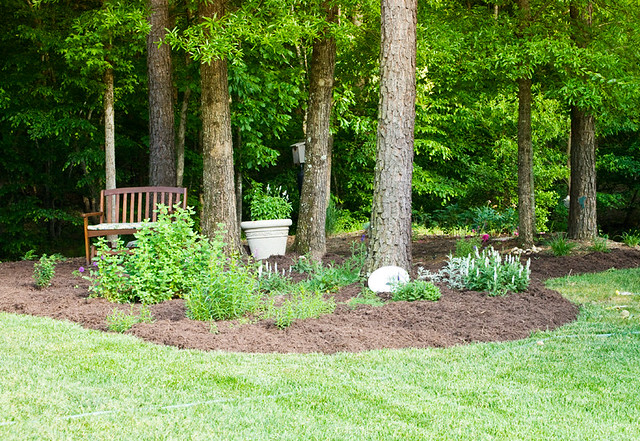
        A third option in tree safety is sculpting a mulch island – sectioning off a portion of your property for trees and other plants to be filled with mulch, without surrounding grass. While this safety precaution might be the most costly, it’s also an inviting, low maintenance alternative if you want less lawn to maintain and more protection for your trees.

        For more tree care tips, check out the resources available on our website.

        Monday, June 27, 2011

        Tree Care Event: Washington Mystics at Michigan Park

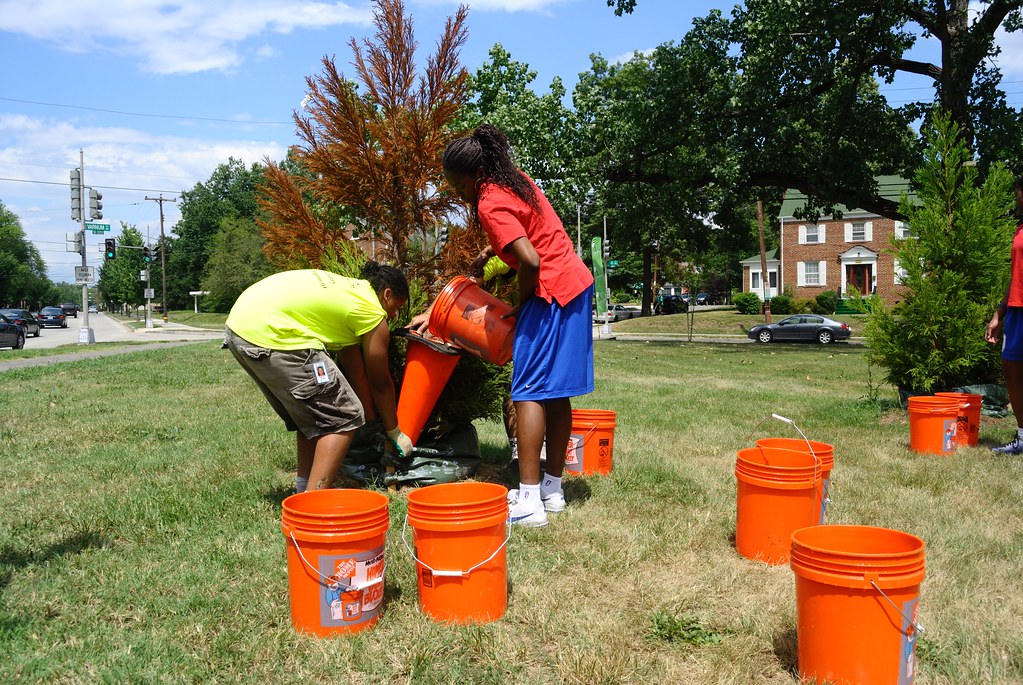
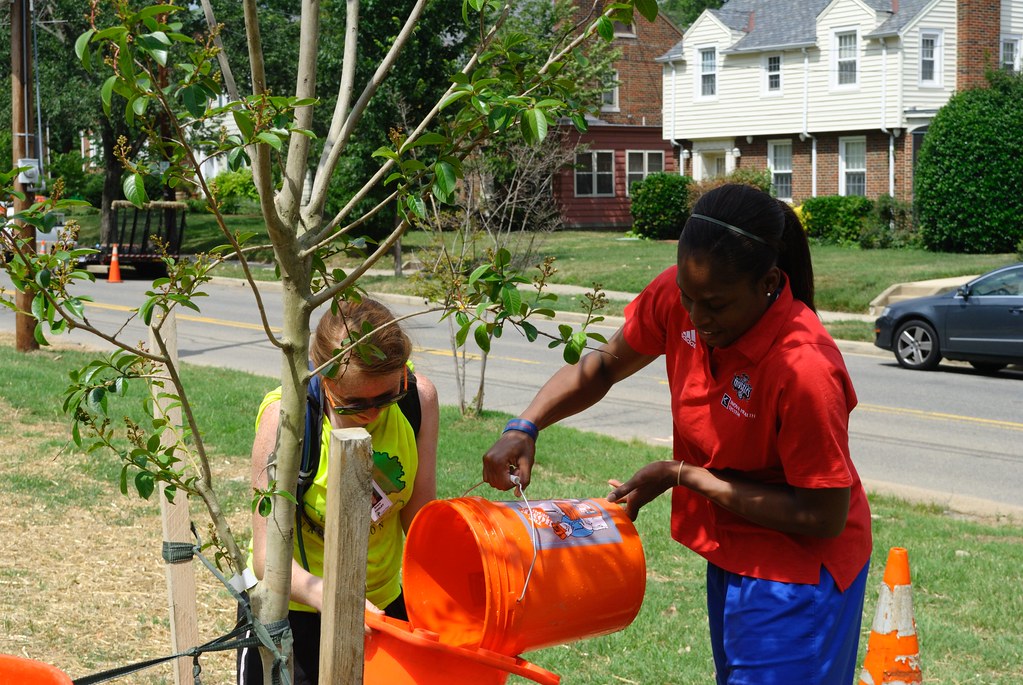
        Karima Christmas helps Summer Crew member Grace Poole water a tree planted by Casey Trees.

        This past Friday, June 24, members of the Washington Mystics joined Casey Trees’ High School Summer Crew to help water trees at Michigan Park in Northeast, D.C. Victoria Dunlap and Karima Christmas – both rookies for the Mystics – were the players in attendance.

        Between the efforts of the Mystics and the Summer Crew, 54 trees were watered, including all of the recent Casey Trees plantings as well as plenty of other trees in the park. Casey Trees planted 21 new trees at Michigan Park during a particularly rainy Community Tree Planting event last April. (View photos on Flickr) In the District, summertime is an especially critical time to monitor your trees’ health, so this week’s watering provided some much needed care to these young trees!

        To learn more about watering, check out our Tree Watering Guide – a best practices guide to keeping your trees hydrated in the summer’s heat. To know just how much water your trees need for the week ahead, follow our tree watering recommendations on Facebook or Twitter every Monday throughout the summer. This week's watering recommendation is "Normal" so watering is optional, although there are likely plenty of hot and dry days ahead this summer so be sure to keep them watered well.

        See more photos from this tree care event at Michigan Park on Flickr.

        Wednesday, June 22, 2011

        Thank You, Advisory Board Volunteers!

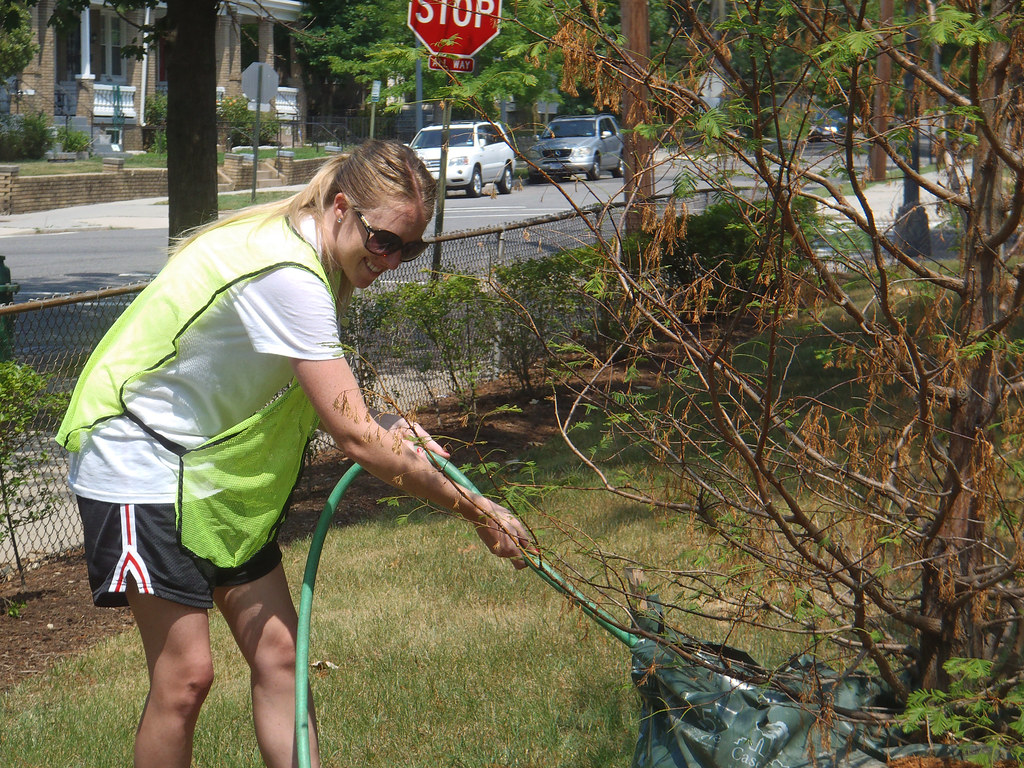
        Kudos to all the volunteers who helped out at a tree care event yesterday! 5 volunteers from The Advisory Board and one resident from Petworth came out to help us water 25 trees at Sherman Circle and 15 trees at Saint Gabriel's Catholic Church.

        Casey Trees hosted a Community Tree Planting event at Saint Gabriel's last November (see photos from this event), and one at Sherman Circle last April. It's important that the young trees we planted at both sites now receive proper care and adequate water. Yesterday, Thursday June 21, we were able to attend to their needs with the help of the volunteers. Thank you so much for your time and effort!

        A volunteer waters one of the 25 trees that were cared for at Sherman Circle on Thursday.

        Volunteer groups will be helping us follow 25 to Stay Alive for our newly planted trees all summer. If you are interested in organizing a tree care event, please contact our Volunteer Coordinator Carol Herwig at cherwig@caseytrees.org. Feel free to check out our other volunteer opportunities as well.

        Monday, June 20, 2011

        High School Summer Crew Season Begins Today

        Contributing Writer: Priscilla Bocskor, Education Coordinator

        Today is the start of our 2011 High School Summer Crew! This is the 10th year of Casey Trees High School Summer Crew where 10 local students age 16 and older work for eight weeks over the summer. Our crew members were selected from many highly qualified students who applied, interviewed and attended our Field Try Out. We were fortunate to have over 100 applicants for the positions and we are really excited about this year's group.

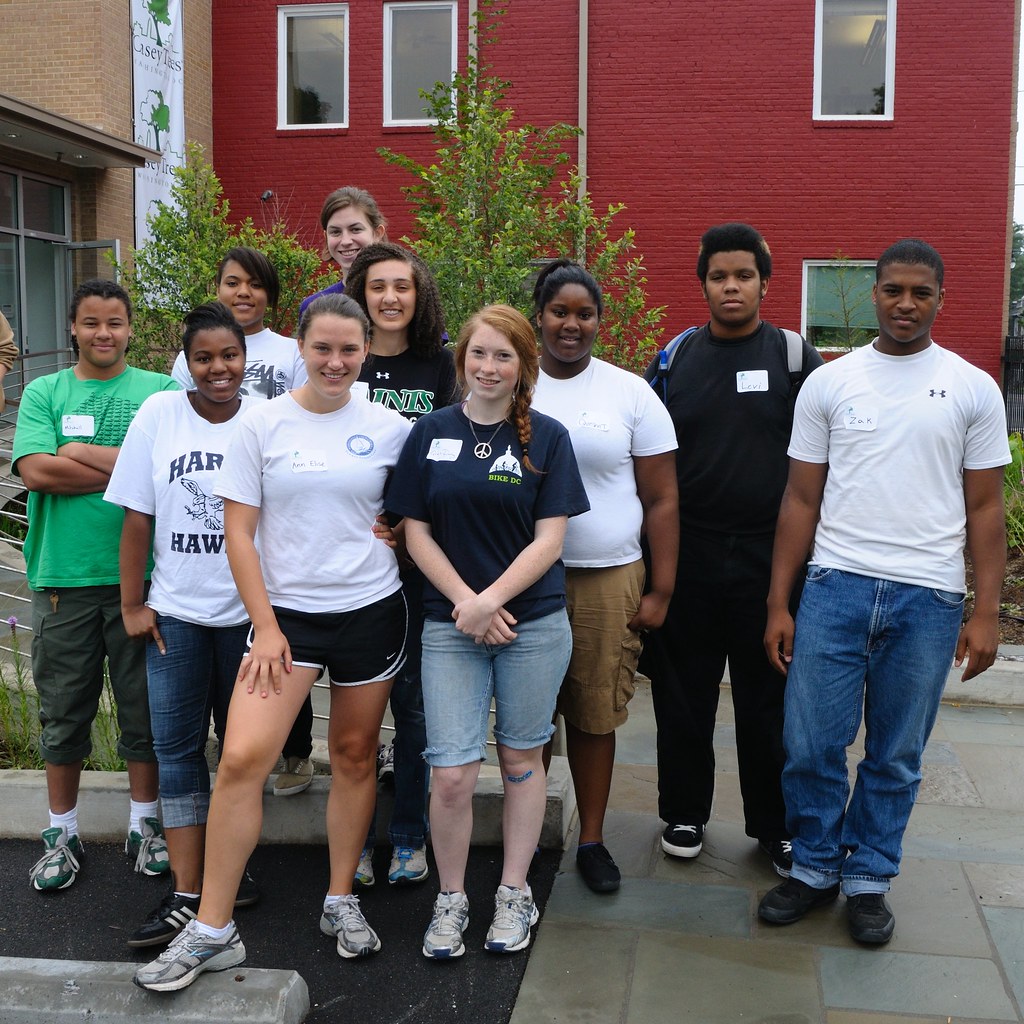
        Summer Crew, Class of 2011

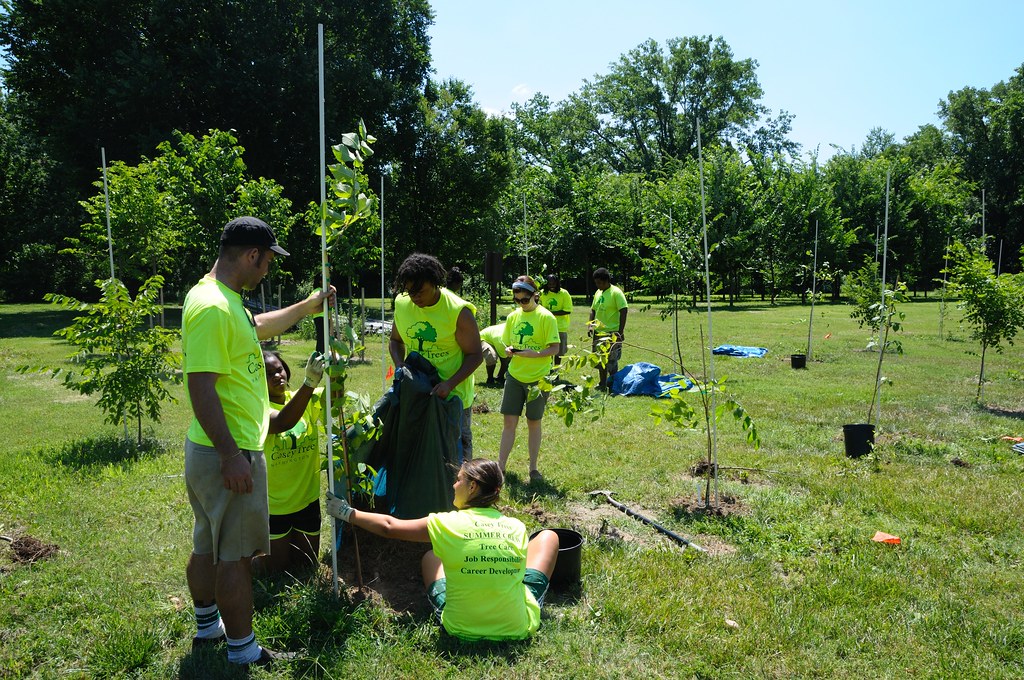
        The main duty of the summer crew students will be to water, weed and mulch trees Casey Trees has planted in the past three years. Newly planted trees in the stressed urban environment need extra care to become established. These trees need 1.5 inches of rain a week or 25 gallons of water to develop healthy root systems.

        Six of the Summer Crew Students will be traveling around D.C. performing maintenance in trucks while four of the students, along with two Casey Trees staffers, will make up the Casey Trees Water-By-Cycle team. The Water-By-Cycle team will bike around D.C. in order to reach their designated maintenance sites.

        In addition to this work, the Summer Crew students will have a chance to participate in four Career Development Days. These Career Development Days are rewards for meeting their tree touch goals (every time the students visit a tree to water, weed, or mulch counts as one tree touch). Students will have to work closely and effectively together to reach these goals. The Development Days include planting elm trees at Dangerfield Island, learning to climb trees at the National Arboretum and doing a tree identification scavenger hunt at the National Zoo.

        Watering trees next to the Casey Trees office.

        The 10 Summer Crew students will each be writing a blog post about their experiences so check back to read all about it. We will also have posts from Casey Trees staff about Summer Crew and Water By-Cycle. Keep a look out - you might just see the Summer Crew hard at work in your neck of the woods this summer!

        View more photos of the Summer Crew's first day on Flickr.

        Thank You, Independent Sector Volunteers!

        Thanks so much to everyone from Independent Sector for helping us keep our trees healthy! This past Friday, 15 volunteers from Independent Sector planted and watered 10 fruit trees (replacements and new trees) and watered 50 trees along the Metropolitan Branch Trail. Casey Trees hosted community tree planting events in April and this past December on the Met Branch Trail. Kelly Pack from Rails to Trails Conservancy also attended along with seven Casey Trees staff members.

        Volunteer groups will be helping us follow 25 to Stay Alive for our newly planted trees all summer. If you are interested in organizing a tree care event, please contact our Volunteer Coordinator Carol Herwig at cherwig@caseytrees.org.

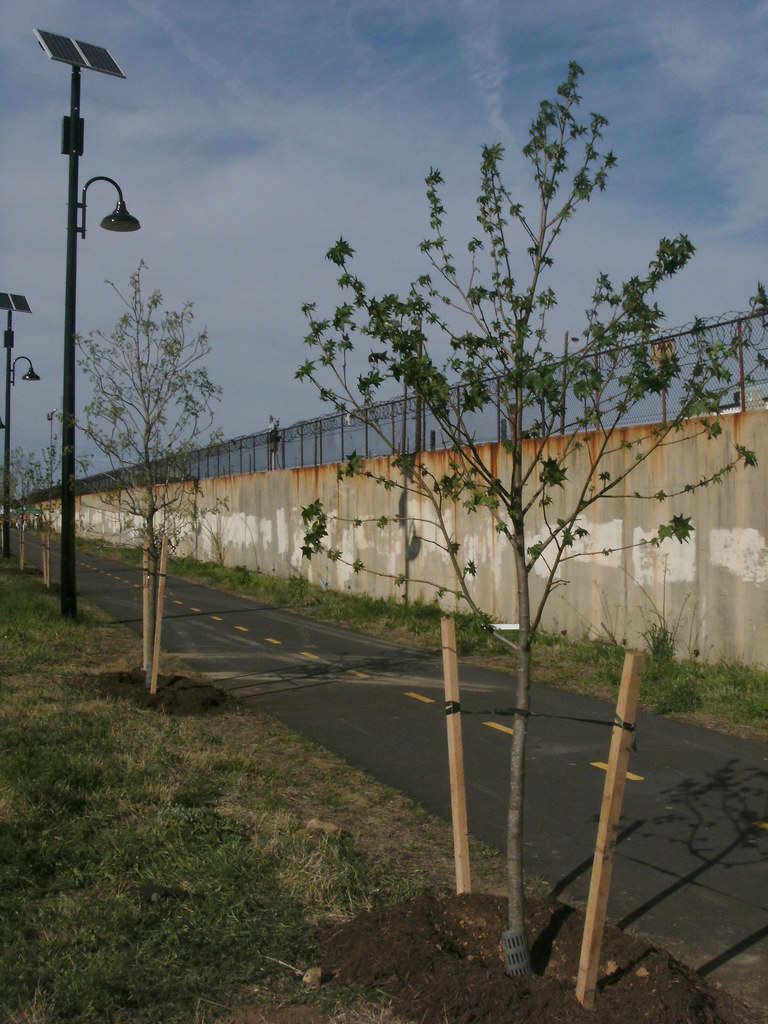
        A couple of trees planted by us on the Met Branch Trail in April.

        Thursday, June 16, 2011

        Summer Tree Care: Pruning

        Thanks again to everyone who helped us prune trees at Murch Elementary on Saturday! If you attended the event, kudos for knowing how to prune. And if you missed it, you’re in luck! This summer we will be blogging summer care tips every other Thursday so you can help D.C.’s trees stay healthy. Today’s topic—you guessed it—summer pruning.

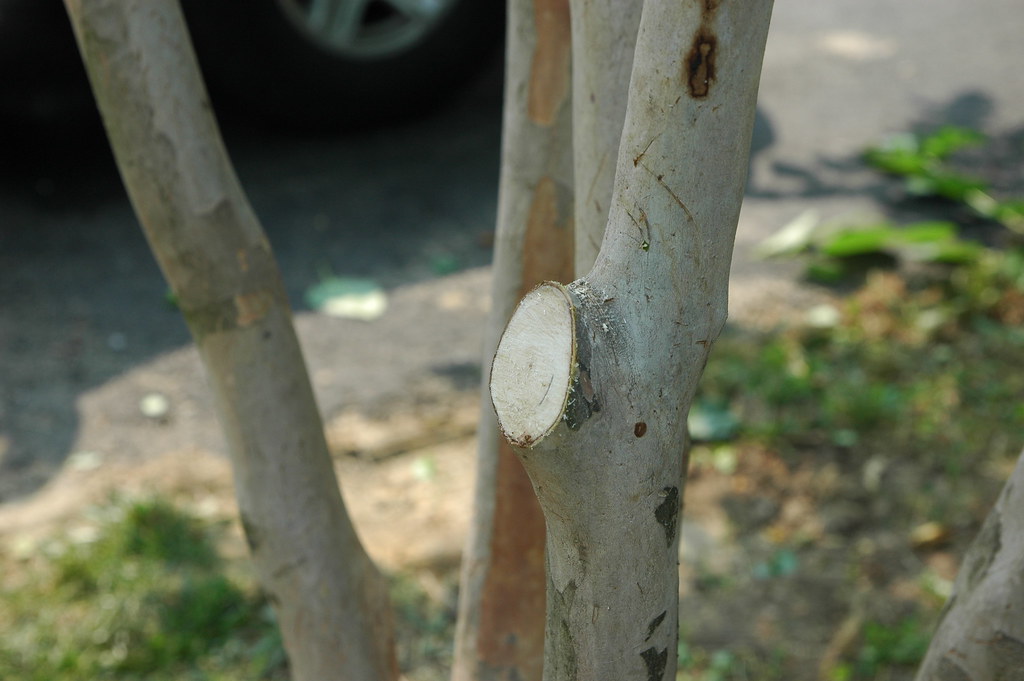
        A clean final cut.
        Some literature suggests that pruning should only be done in the winter. But while winter pruning may be better for structural purposes, the summer is actually a great time to remove dead or injured branches. When a tree has its leaves, you can distinguish the dead branches from the live branches much more easily than when the whole tree is bare. Dead branches make the tree more vulnerable to insects and disease and should be pruned promptly.

        So if you’ve noticed any trees with dead or damaged parts, don’t wait until winter! You can help your tree out now. Before you begin, here are a few things to keep in mind:
        • Don't over-prune! No more than 25% of a tree’s canopy should be pruned in one year—especially if you are working with a young tree.
        • Prune parts that are threatening to the tree’s health. Branches that are dead, damaged, or crisscrossed all qualify.
        • Leave elm trees alone for now. Because of their susceptibility to Dutch elm disease, elms should not be pruned during summertime.
        • Always wear head and eye protection to avoid injury.
        • Some pruning care—such as the use of a chainsaw to remove extra heavy branches or branches far out of reach—should be handled by a professional. Check out the replay of last week’s Tree Talk Thursday for more information on certified arborists.

        A twisted branch can harm an otherwise healthy tree. Photo credit: HaeckDesign

        Since pruning is a skill that takes practice, it is best to learn how to prune from an expert before trying it on your own. We suggest becoming a Citizen Forester. Citizen Foresters can participate in our pruning events, which will take place once a month for the remainder of the summer. For dates and locations see our calendar. If you’re interested in becoming a Citizen Forester, sign up for our next qualifying class: Trees 101. If you really want to get into pruning, we also provide training sessions in the winter where you can officially become a Citizen Pruner.

        For more pruning information, check out the Department of Agriculture's "How to Prune Trees" pamphlet. Thanks for helping us take care of the District's trees, and don't forget to check back for more summer tree care tips!

        Monday, June 13, 2011

        Murch Elementary Pruning Recap

        This past Saturday morning, 12 volunteers attended a pruning workshop at Murch Elementary School in Northwest D.C., the first of four opportunities this summer developed to help Citizen Foresters improve their pruning skills and provide much needed structural pruning to some of the District's trees.

        Freshly cut and piled branches.

        Casey Trees staff demonstrated a number of pruning techniques - always emphasizing safety - and introduced participants to a number of pruning tools - some familiar, others new. Many of the pruned trees were those Casey Trees' volunteers had previously planted at the school through its Community Tree Planting (CTP) program. Murch has partnered with Casey Trees on four CTP events over the years. This weekend's pruning exercise was another investment by Murch and Casey Trees in ensuring the trees thrive. See more photos from this event on Flickr.
        Casey Trees' Urban Forestry Instructor Shawn Walker demonstrates for two volunteers.

        Our pruning workshops are intended to be informative but are primarily are work days and as such are reserved for Citizen Foresters who have previous pruning experience and can examine and prune trees properly and efficiently. More than 100 trees were "touched" by Casey Trees volunteers.

        If you're interested in becoming at Citizen Forester or learning more about the program, you can visit the Citizen Forester webpage or sign up for an upcoming Citizen Forester-qualifying class, Trees 101, on Saturday, July 25 at 9:00 a.m. The class is free and it is a great way to learn about trees and meet like-minded people.

        Sometimes pruning can really draw a crowd.

        The second pruning event will take place at Simon Elementary School on Saturday, July from 8:30 a.m. to 12:00 p.m. in Southeast. If you are a Citizen Forester and want to sharpen your pruning skills, email Shawn Walker, Urban Forestry Instructor. Those who participate in three or all of the pruning workshops will receive a pair of their very own pruning shears.

        If you are not free to attend, be sure to continue caring for trees on and surrounding your property this summer. Check our website for pruning and other tree-care tips.