Showing posts with label Summer Tree Spots. Show all posts

Thursday, August 18, 2011

Summer Tree Spots: Congressional Cemetery

Our final Summer Tree Spot is a little different from the first five in the series. True, a cemetery might not be your top pick for a place to picnic. But loaded with history and decorated with various tree species, Congressional Cemetery makes the cut for must-see sites in the District.

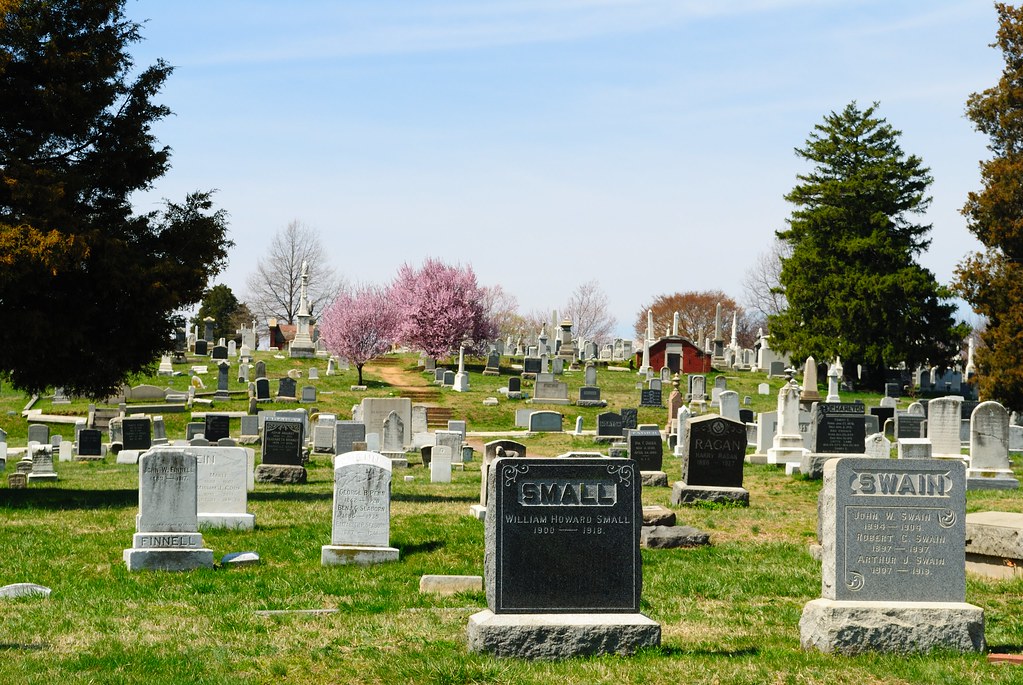
Cherry trees bloom behind headstones in March

Located at 1801 E Street Southeast in Ward 6, the Historic Congressional Cemetery spans over 35 acres of land. 14,000 headstones—some extravagant, some old and surprisingly simple—and a remarkable September 11 memorial grove are just a couple reasons to visit the cemetery. Within five years of its founding in 1807, Congressional Cemetery became the resting place for 13 congressmen and two vice presidents. Today it is on the National Register of Historic Places and is home to quite a few late Americans who played a major role in shaping our nation. Among them are:
  • Elbridge Gerry, Vice President to James Madison and signer of the Declaration of Independence
  • Edgar Hoover, director of the FBI from 1924 until 1935
  • American composer John Philip Sousa, known for his famous marches including “Stars and Stripes Forever”
  • Leonard Matlovich, Vietnam War veteran and gay rights activist—the powerful quote on his headstone alone justifies a trip to the cemetery
  • Pushmataha, chief of the Choctaw nation in the early 1800s and negotiator of several land treaties with the United States
  • Belva Ann Bennett Lockwood, woman suffragist and the first female attorney permitted to practice before the U.S. Supreme Court
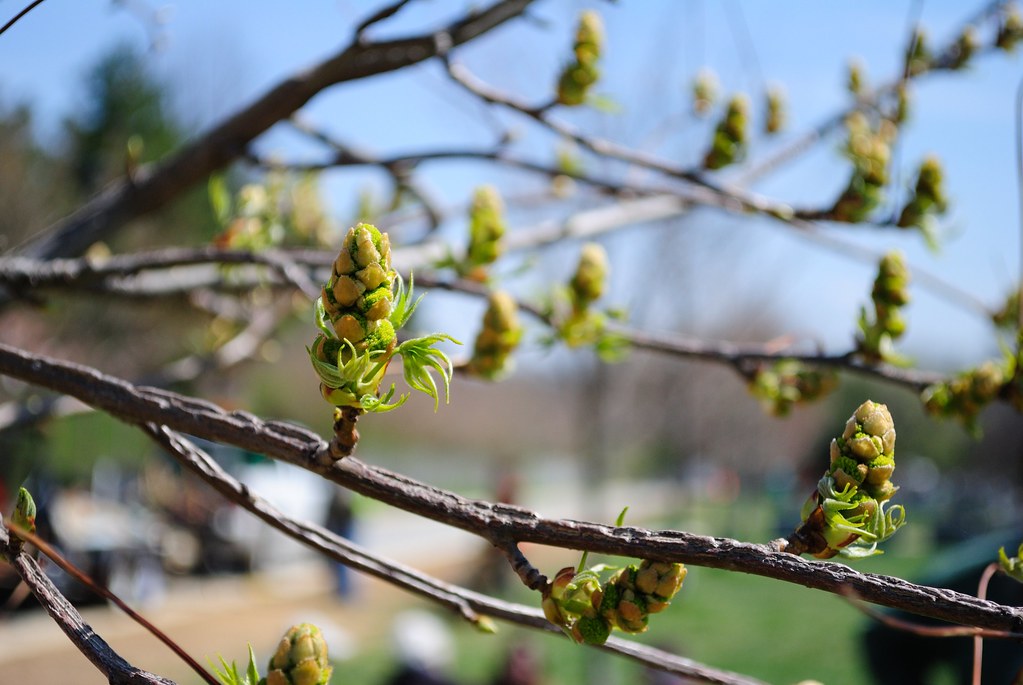
A young sweetgum buds on Congressional Cemetery grounds during a Community Tree Planting event in March.

A complete interment index can be found here on the Association for the Preservation of the Historic Congressional Cemetery’s website. You can also print themed walking tours or enjoy a docent-led tour offered every Saturday at 11 a.m. through October.

Don’t forget to observe the September 11 memorial grove during your visit. The grove is located on the west side of the cemetery, near 17th Street SE. Lummi healing poles that travelled 4,500 miles from Washington State and were blessed by 13 Indian tribes across the country make the memorial grove particularly special. Casey Trees donated the grove’s 148 trees in 2004. Most of the commemorative trees are hornbeams and Chinese elms, though there are several American witchhazel trees, galaxy magnolia, American elms, and okame cherry trees as well.
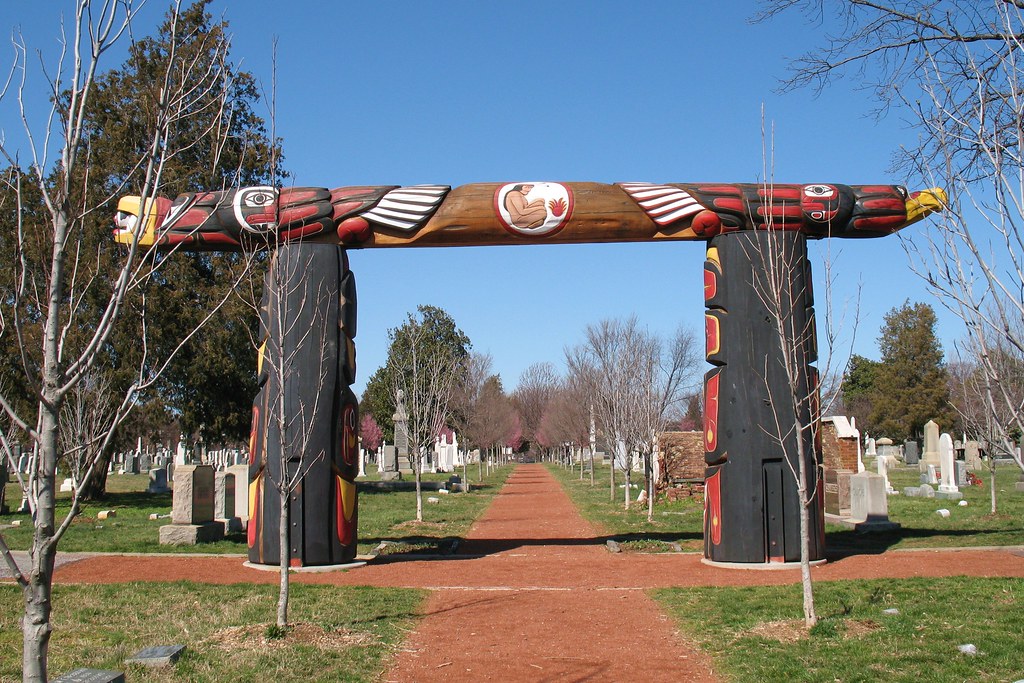
The Lummi Healing Poles stand among memorial grove's long line of trees. Photo credit: Mr. T in DC
For more information on upcoming events, volunteer opportunities, a dog-walking program and more, visit the website for the Association for the Preservation of the Historic Congressional Cemetery. You can also learn about the individual trees by checking out our Casey Trees map. Simply search for 1801 E St SE under "Address or Place", zoom in and click on each tree for species and origin information.

Thursday, August 4, 2011

Summer Tree Spots: Cedar Hill

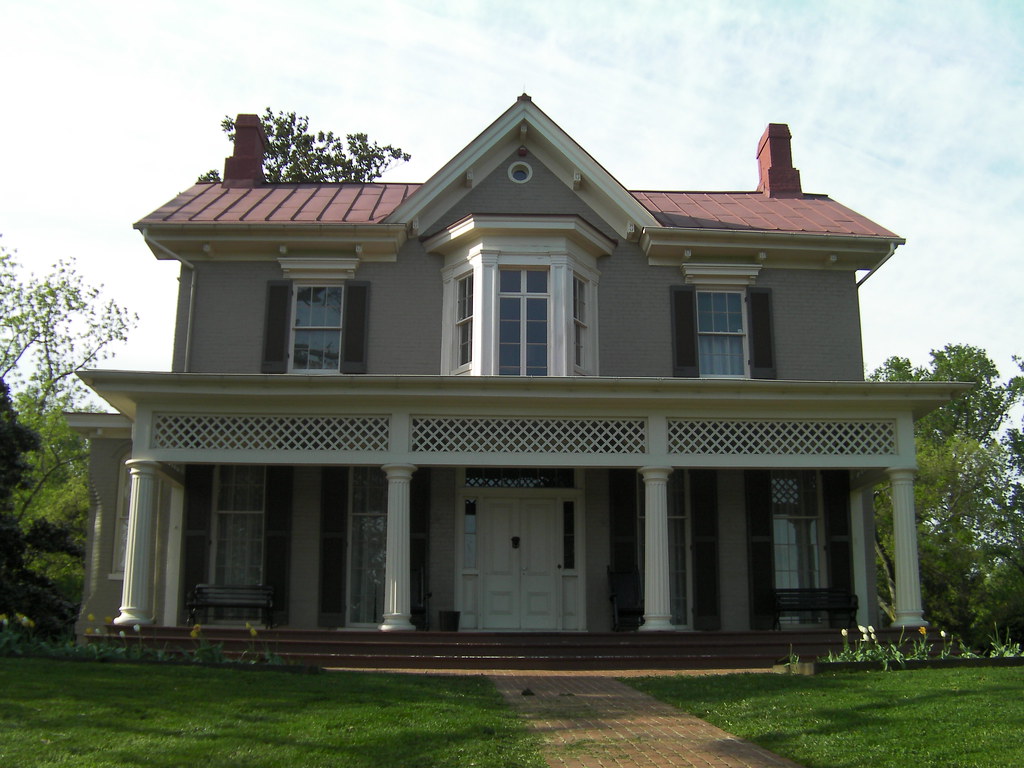
The Frederick Douglass House at Cedar Hill, built in 1855

Whether you’re looking for a historical adventure or just a pretty place to picnic, Cedar Hill is the perfect location for a stay-cation day in D.C. Located at 1411 W Street SE in Ward 8, Cedar Hill is a National Historic Site that was home to abolitionist and writer Frederick Douglass. The site's restored house, diverse tree canopy and spectacular view of downtown D.C. make it a Summer Spot well worth visiting.

Frederick Douglass and his family occupied the 21-room mansion and 15 acres of land at Cedar Hill from 1877 until 1895. After Douglass’s death, the site belonged to several non-profit associations before becoming a unit of the National Park Service in 1962. It has since undergone two restorations and is now open to the public year-round.
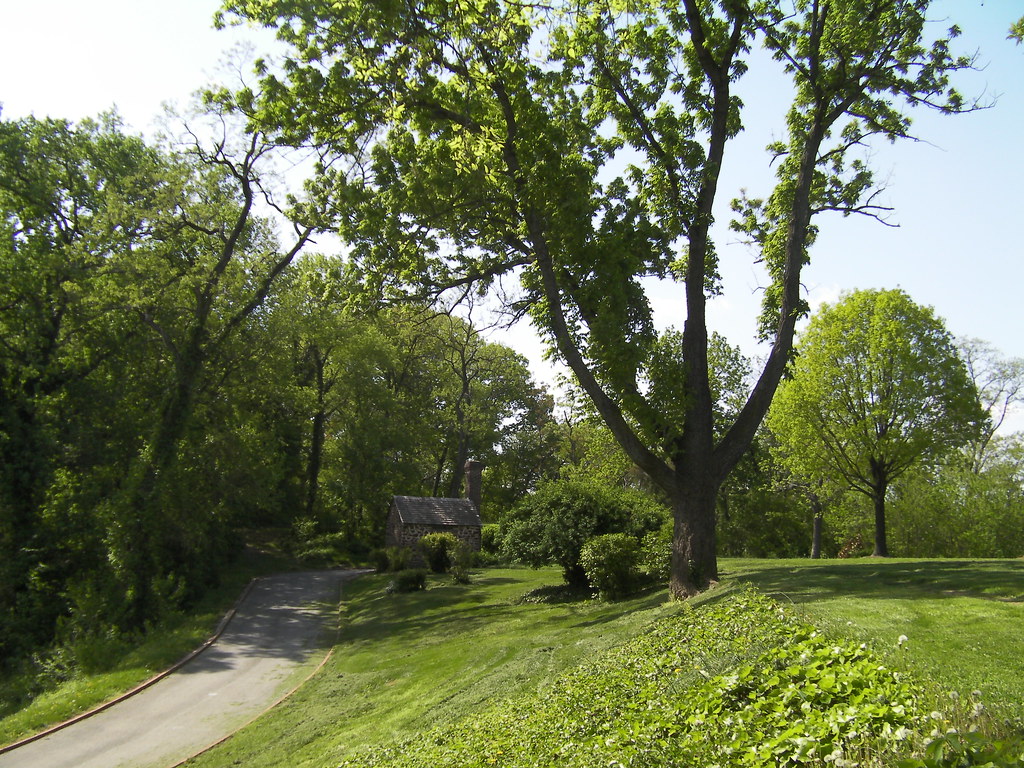
Shade trees at Cedar Hill. The small building is the Growler, where Douglass used to think and write.

What to do:
  • See where Frederick Douglass worked and what inspired him. Tour times and reservations for the Frederick Douglass House are available here.
  • Check out the old white oak tree on the front lawn, the largest tree that was alive and well when Frederick Douglass lived at Cedar Hill.
  • View the D.C. skyline from across the river.
  • Explore native tree species such as tulip trees, white ashes, black locusts and several kinds of oak trees. 
  • Pack a picnic to enjoy on the shady lawn of Cedar Hill.
A great view of the Washington Monument from the steps of Cedar Hill. Photo credit: Tedeytan

Casey Trees hosted a Tree Walk at Cedar Hill in 2010. Tentatively, we will offer one again this fall. Check back often to our calendar for updates on Tree Walk schedules and other upcoming events. 

Can’t wait for the next docent-led tour? Take advantage of our free downloadable tree walks. Sites maps are currently available for the Franciscan Monastery of the Holy Land and the NGA Sculpture Garden. Check back for new downloadable tree walks added monthly.

Thursday, July 21, 2011

Summer Tree Spots: Rock Creek Park

Have you ever wanted to completely engulf yourself in nature but don't have the time for an excursion out into the country? No need to fret, as you can easily do this at Rock Creek Park without even setting foot outside the District.

Comprised of more than four square miles of urban forest and spanning portions of Wards 3 and 4, Rock Creek Park is the largest and one of the most notable parks in D.C. The park was first established by an Act of Congress in 1890, placing it among some of the nation's first national parks. Today, more than 100 years later, it is still a favorite outdoor site for Washingtonians. 

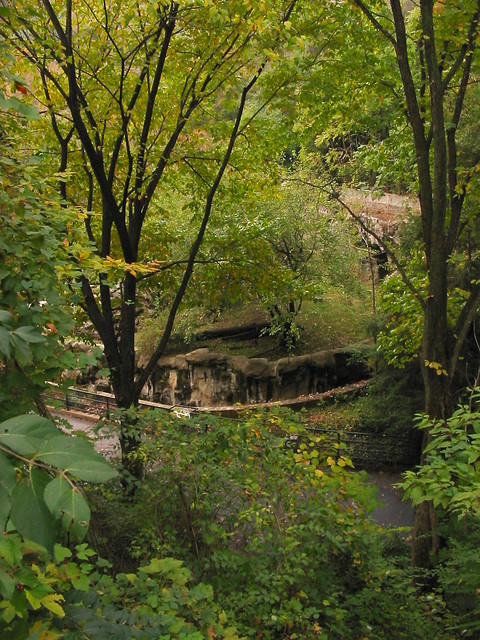
A majestic cluster of trees stand tall in Rock Creek.

Since it has been protected for such a long time, Rock Creek's forest holds some of the oldest and largest trees in Washington. Notable species you may find include tulip, white ash, American beech, hickory and red oak. By the edges of the creek green ash, hornbeam and river birch stand tall along with other varieties. This is certainly not a comprehensive species list but simply a taste of the park's vast holdings of trees.

Rock Creek's namesake creek bisects its full tree canopy in summer.

In the past, Casey Trees has hosted a number of tree walks and events at Rock Creek. While there isn't a walk scheduled at the Park in the near future, you can see what walks are coming up on our Calendar and make sure to check out the new downloadable Tree Walks section of our website. Or, craft your own tree walk and explore all the arboreal offerings throughout Rock Creek Park. It is open daily during daylight hours, so take advantage of the late sunsets sometime this summer with an outing in the park.

Thursday, July 7, 2011

Summer Tree Spots: Tudor Place

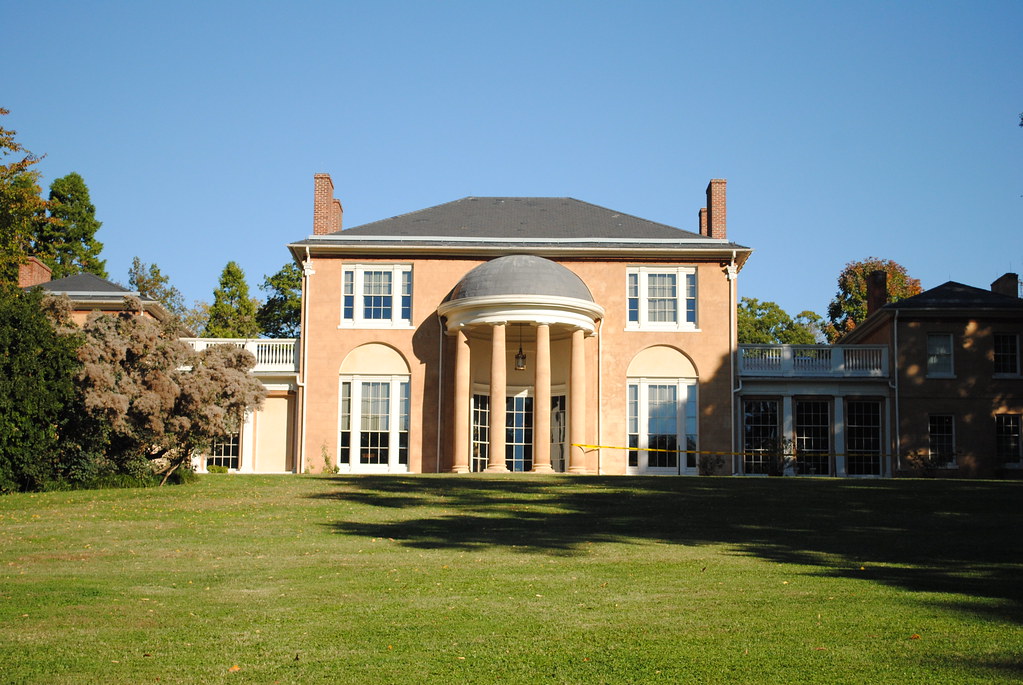
The house and front lawn at Tudor Place.

We’re all familiar with the big-time historical attractions in D.C. They’re magnificent, of course, but the monuments, the Mall and the museums can cast a large shadow over less-visited spots in the District that deserve some limelight.

Tudor Place Historic House and Garden offers the perfect pause from mainstream D.C. sightseeing. Overlooking Georgetown at 1644 31st Street Northwest, Tudor Place is home to a beautiful garden, a historical museum and - of course - various kinds of trees. About two-thirds of the property is shaded by a diverse tree canopy, which houses species such as kobus magnolia, yellow buckeye, Kentucky coffee-tree, Normann fir and more.

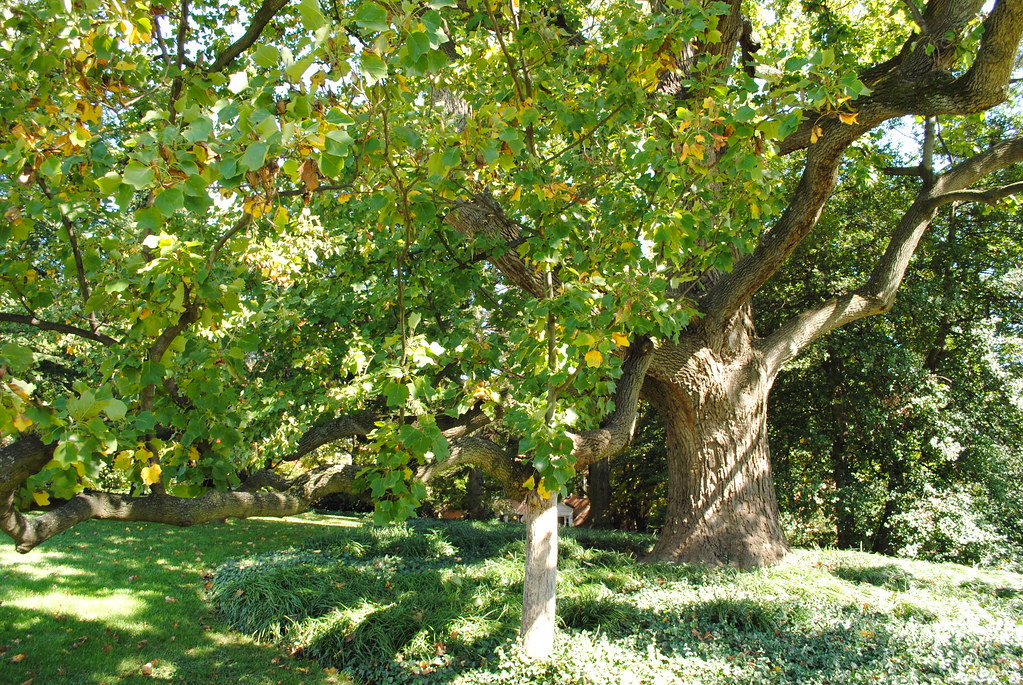
The massive tulip poplar tree on the southeast grounds.

The estate used to be the home of Martha Washington’s granddaughter Martha Curtis Peter and remained in the family from 1816 until 1983. Tudor Place is now open for public viewing Tuesday through Saturday from 10 a.m. to 4 p.m. and on Sundays from noon to 4 p.m. Take time this summer to check out all that Tudor Place has to offer!

During your visit, don’t miss:
  • The 100+ personal objects that belonged to George and Martha Washington, including one of the two known surviving letters from George Washington to Martha.
  • A large scarlet oak tree on the north side. The oak was planted in 1932 to commemorate George Washington’s would-be 200th birthday.
  • A tulip poplar that was deemed D.C.’s Millennium Tree, located on the south side of the estate.
  • A large pecan tree that Casey Trees named the champion of its species in 2006.
  • Our trees! Casey Trees planted 26 young trees at Tudor Place during two Community Tree Planting events, one last October and the other this past April. Visit our plantings map and zoom in on 1644 31st Street for species and locations.

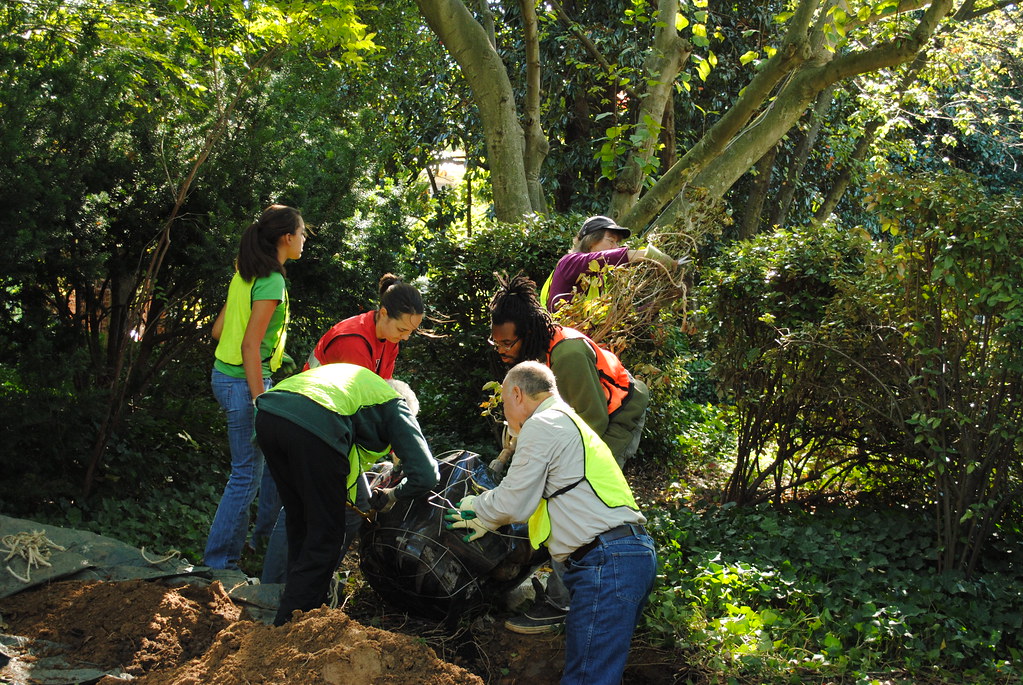
    Volunteers plant with Casey Trees at Tudor Place in October. See our Flickr page for more photos.

    Tudor Place is about a 25-minute walk from Dupont Circle Station on the Red Line. Buses 32, 36 and the Georgetown-Union Station Circulator also serve Wisconsin Avenue nearby. Admission for a docent-led house tour and a self-guided garden tour is $8.00 Admission for the self-guided garden tour only is $3.00.

    Thursday, June 23, 2011

    Summer Tree Spots: National Zoo

    If you live in or have ever visited the Washington D.C. area, you have spent an afternoon at the family-friendly Smithsonian National Zoological Park.

    The lions, tigers and bears are impressive but so is the Zoo's diverse collection of trees. Tree species you can find throughout include Himalayan pine, Turkish hazel, green and white ash, yellowwood and golden catalpa. Although trees usually take a back seat to the animals - especially the pandas - the National Zoo is one of the best places in D.C. to practice your tree identification skills and find some cooling shade during our notoriously hot summer months.

    photo
    A moment of serenity in the National Zoo. Photo credit: Mo Kaiwen

    While we have yet to coordinate a Community Tree Planting (CTP) event at the Zoo - hint, hint - we have coordinated GIS scavenger hunts for our Summer Crew team members on the grounds and helped the Smithsonian Institution do an inventory of their trees. If you want to check out some of the Casey Trees-planted trees nearby, stroll down to Kalorama Park in Adams Morgan. Casey Trees hosted CTPs at Kalorama Park in the fall of 2008 and 2005. You can also locate other Casey Trees-planted trees in close proximity to the Zoo using the Casey Trees Map.

    The Zoo is Metro accessible, free to the public and open 10:00 a.m to 6:00 p.m. during the summer. If you haven't visited the Zoo recently, find some time this summer to enjoy all its natural offerings - trees and animals alike.

    Thursday, June 9, 2011

    Summer Tree Spots: Fort Dupont Park

    Staying in town this weekend and need suggestions for where to go? All this summer we’ll highlight spots across the District boasting tree canopies that make them ideal locations for an afternoon picnic, relaxing walk or bike ride.

    This week’s Summer Tree Spot is Fort Dupont Park. Located in Southeast D.C. at the intersection of Minnesota and Massachusetts Avenues and adjacent to Ridge Road, Fort Dupont is a historic site that once defended the District from Confederate attack in the Civil War. The 400-acre sites features a hiker-bike trail, athletic courts and fields, picnic areas and community gardens. Remains of the fort are quite evident (located at the picnic groves off of Alabama Avenue SE) along with an amazing and diverse urban forest.

    Bike path in Fort Dupont Park. Photo Credit: dannyfowler
    Fort Dupont is home to a wide range of tree species, many of which are native to the Washington area. Whether you are a Certified Arborist or just simply want to seek refuge in the shade on a warm summer’s day, the park’s impressive selection of tree species is a sight anyone can appreciate. By the Minnesota and Massachusetts Avenues entrance there are clusters of silver maple; black locust; and southern chestnut. Another section of the park is native woodlands, comprised of chestnut oaks, boxelders, sycamores and American beeches.

    In Spring 2006, Casey Trees hosted a Community Tree Planting event at Fort Dupont Park. You can view  photos from this event on our Flickr photo archive and locate the Casey Trees-planted trees there using the Casey Trees Map. Why not take a walk or ride to Fort Dupont and take a look at how our trees are doing in person? Fort Dupont Park is metro accessible and parking is available on site.

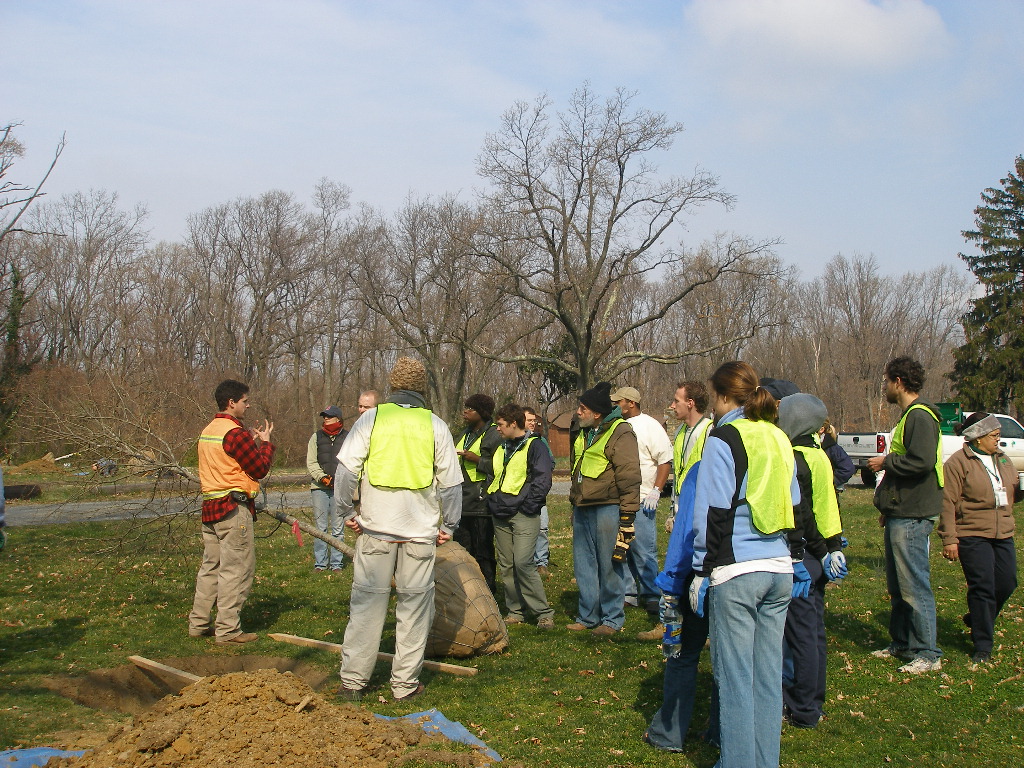
    Casey Trees volunteers after a Community Tree Planting at Fort Dupont in March, 2006.